
Posted by Andrea Durway
Festival of Nations St. Louis: History & Impact
Festival of Nations St. Louis: The Story Behind the Region’s International Community
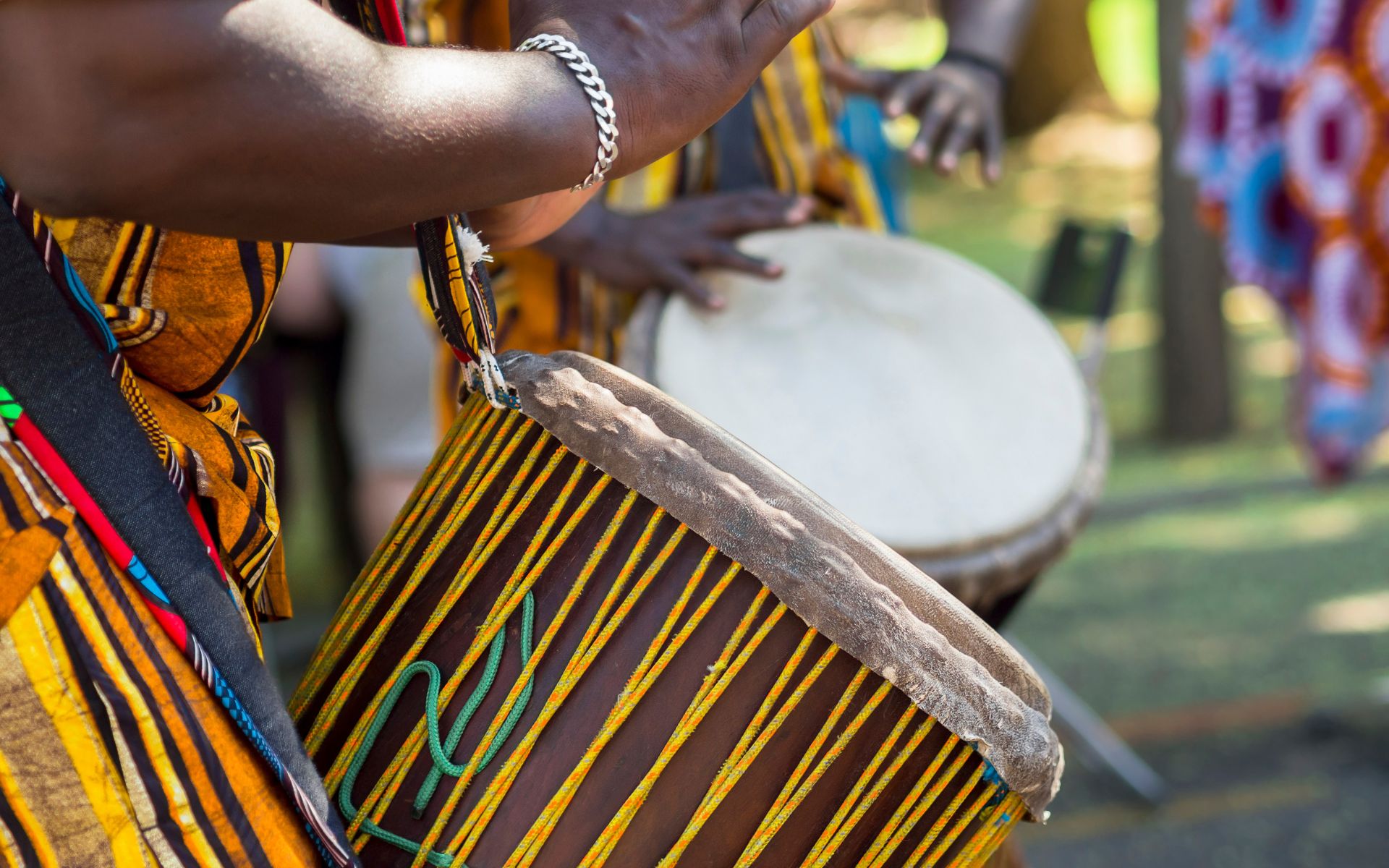
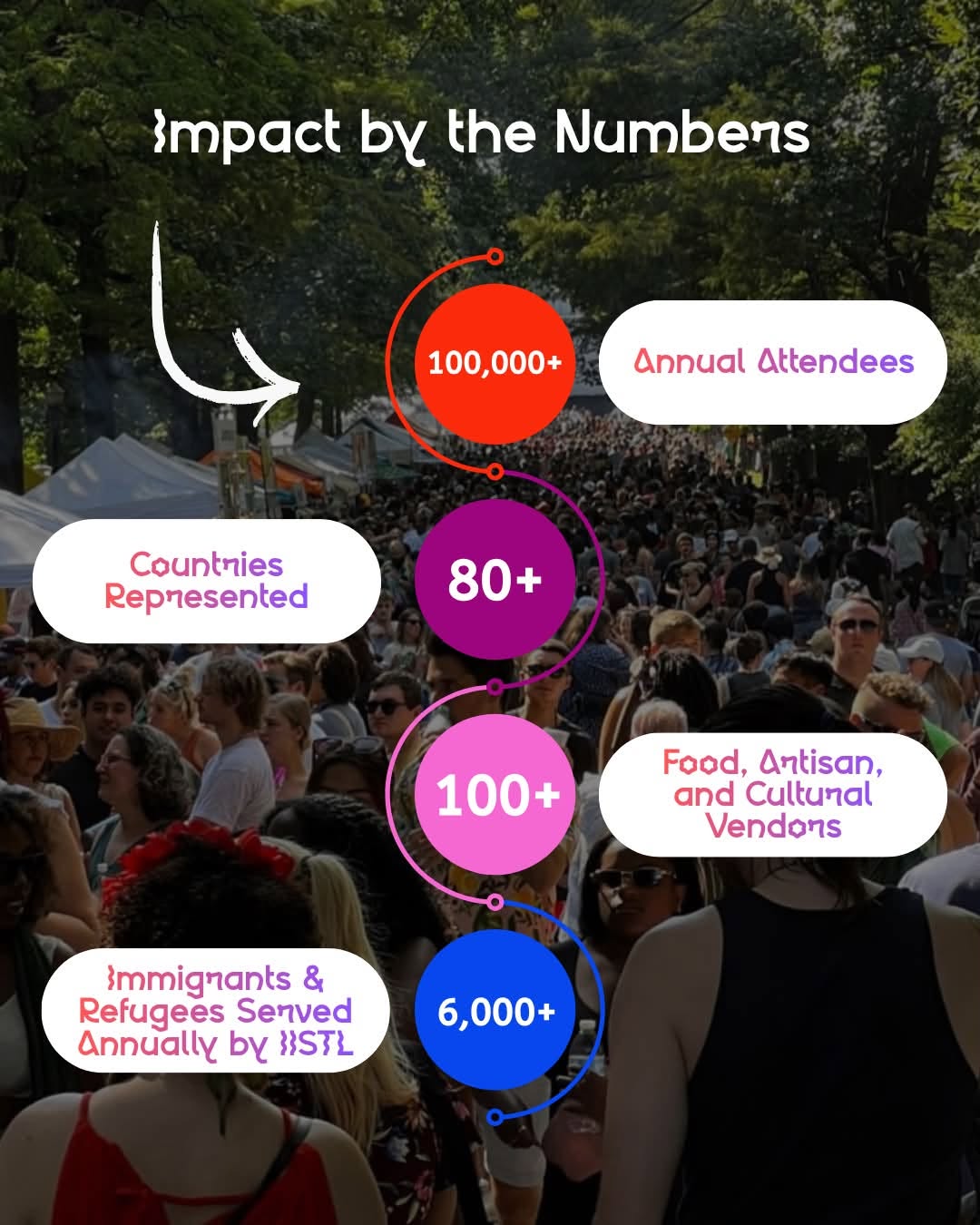
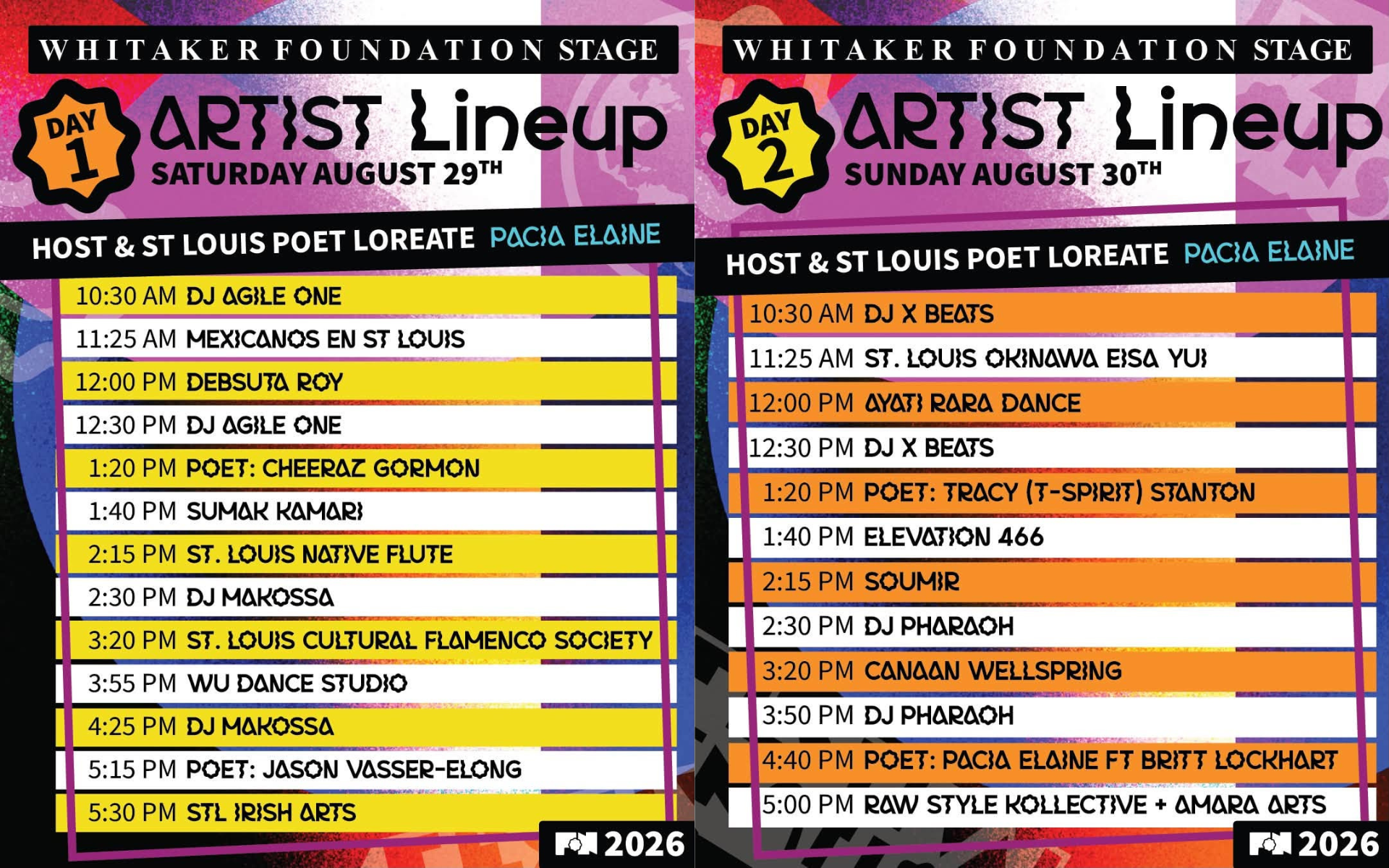
Festival of Nations St. Louis returns to Tower Grove Park this weekend, turning the park into the most cosmopolitan spot in Missouri. The International Institute of St. Louis’s flagship event runs August 29–30, 2026, with more than 80 countries represented across upwards of 100 vendors, dozens of live performances, and a crowd that typically tops 100,000 people over the two days. It’s free, it’s enormous, and if you’ve never been, it’s genuinely one of the best weekends St. Louis puts on.
But the festival is really a two-day, highly visible expression of something that’s been quietly reshaping St. Louis neighborhoods for over a century.
A Century in the Making
Festival of Nations traces its roots back to 1920, when the International Institute organized what was then called the May Festival — one of the earliest multicultural celebrations in the country. About 2,000 people showed up. A hundred years later, the event that grew out of it draws fifty times that number to the same park, with food, music, and craft traditions from six continents.
That’s a useful reminder that St. Louis’s international character isn’t a recent development. It’s been building, in waves, for generations — and it shows up in the neighborhoods around Tower Grove Park especially. South Grand’s restaurant strip, the Bosnian community’s deep roots in Bevo Mill and south city, the Vietnamese and Chinese business corridors along Olive — a lot of what makes St. Louis feel distinct on a Tuesday night out is downstream of exactly this history.
What the Numbers Say
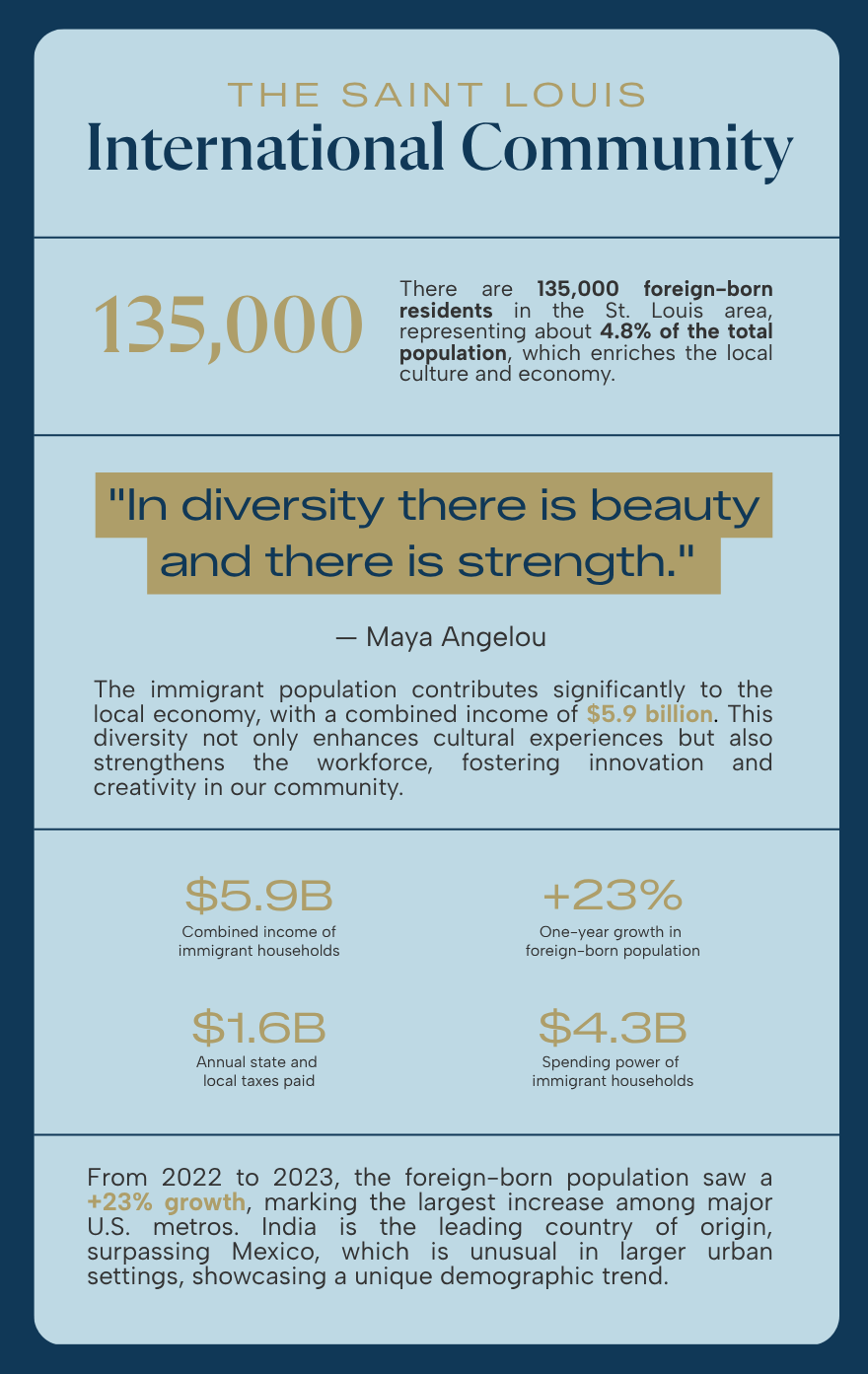
St. Louis’s foreign-born population sits at roughly 135,000 people — about 4.8% of the metro region, notably below the 13.7% national average. Interestingly, the region doesn’t follow the typical pattern seen in most major U.S. metros: immigrants from India make up the largest foreign-born group here, ahead of immigrants from Mexico, which is the more common story nationally.
The economic footprint is real. A regional analysis of immigrant households found they contribute close to $6 billion in combined income to the St. Louis economy, pay well over a billion dollars in state and local taxes, and hold billions more in spending power — money that flows directly into local businesses, housing, and services. Immigrants are also disproportionately likely to start small businesses, a pattern local economists and business leaders point to as a meaningful piece of the region’s economic development strategy.
The trend line hasn’t been perfectly straight. St. Louis posted the largest one-year jump in foreign-born population of any major U.S. metro between 2022 and 2023 — a 23% increase — before national data collection changes and shifting federal immigration policy contributed to a modest pullback in 2024–2025. Local demographers describe the overall picture as mixed: real growth in some communities, particularly Asian and Latino populations, alongside broader headwinds affecting the region’s population as a whole.
Why This Weekend Matters Locally
Organizations like Greater St. Louis, Inc. and the St. Louis Mosaic Project have spent over a decade treating international population growth as an economic development priority, not just a cultural one — the thinking being that a region competing for talent and business investment benefits directly from being a place people from anywhere in the world choose to put down roots. Festival of Nations is, in a sense, the public face of that work: two days that put St. Louis’s global connections on full display, right in the middle of one of the city’s most historic parks.
If You’re Going to Festival of Nations St. Louis
When: Saturday, August 29, 10 a.m.–7 p.m., and Sunday, August 30, 10 a.m.–6 p.m.
Where: Tower Grove Park
Cost: Free admission
What to expect: International food and beverage vendors, live music and dance performances, an artisan marketplace, and cultural exhibits from community organizations across the region
If you live in Shaw, Tower Grove South, Compton Heights, or anywhere else within walking distance, this is about as good as a neighborhood amenity gets. And if you’re newer to the area, it’s a genuinely great introduction to just how many corners of the world St. Louis actually contains.
Frequently Asked Questions
When is Festival of Nations St. Louis 2026?
Festival of Nations St. Louis takes place Saturday, August 29 (10 a.m.–7 p.m.) and Sunday, August 30 (10 a.m.–6 p.m.), 2026, at Tower Grove Park.
Is Festival of Nations St. Louis free?
Yes. Festival of Nations St. Louis is free to attend, with optional paid VIP upgrades available for those who want them.
Where can I park for festival of nations?
Paid and VIP parking is accessible by entering through Magnolia Avenue and turning west. Street parking is free and is available on neighborhood streets surrounding Tower Grove Park (such as along Magnolia Avenue and Arsenal Street), though it fills up very quickly. Free perimeter shuttle services often run around the outside of the park to help transport visitors from surrounding areas.
How many countries are represented at Festival of Nations St. Louis?
More than 80 countries are represented across over 100 vendors, alongside live music, dance performances, and cultural exhibits from community organizations.
How did Festival of Nations St. Louis get started?
Festival of Nations St. Louis traces its roots to 1920, when the International Institute of St. Louis organized the May Festival — one of the earliest multicultural celebrations in the U.S. About 2,000 people attended that first event; today’s Festival of Nations draws more than 100,000.
What is the economic impact of St. Louis’s international community?
Immigrant households in the St. Louis region contribute close to $6 billion in combined income, pay more than $1.6 billion in state and local taxes annually, and hold roughly $4.3 billion in spending power.
What percentage of the St. Louis population is foreign-born?
About 4.8% of the St. Louis region’s population is foreign-born — roughly 135,000 people — below the 13.7% national average.