
Posted by Dawn Griffin
10 Things You Need to Know Before Moving to St. Louis
Thinking about Moving to St. Louis? It helps to know a few local quirks before you arrive. St. Louis is a genuinely great place to call home, but it has its own geography, traditions, food obsessions, and neighborhood personality. Some of these things are practical. Some are just plain fun. All of them will help you feel more at home faster.
10 Things to Know About St. Louis Before you Move or Relocate
1. St. Louis City and St. Louis County are separate
This is one of the first things people learn when moving here, and it can be confusing at first.
St. Louis City and St. Louis County are not the same government entity. They operate separately. In daily life, that difference often feels invisible. If you are driving from downtown out toward places like Creve Coeur, you are not likely to notice the exact moment one ends and the other begins.
Still, the distinction matters in a few important ways:
- Residents in the county do not vote for the city mayor.
- Residents in the city do not vote for the county executive.
- The school systems are organized differently.
St. Louis City has its own school district, while St. Louis County includes multiple school districts. For anyone moving here and searching for a home, school district is often a more useful way to narrow options than zip code.
2. “Across the river” can mean more than one place
When someone says they live across the river, do not assume they mean only one direction.
That phrase can refer to people living across the Mississippi River in Illinois. It can also mean people living across the Missouri River in St. Charles County. That tells you something important about the region: St. Louis is much bigger than just the city itself.
The broader metro area includes communities spread across multiple counties and even into another state. People commute from all over the region into major job centers like downtown and Clayton. So when locals talk about St. Louis, they are usually talking about the whole regional footprint, not just the city limits.
If you are Moving to St. Louis, it is worth thinking regionally, not just by city boundary.
3. St. Louis Has an Underrated Food Scene
One of the best surprises about moving here is how much personality the food scene has.
Wherever you are in the region, whether downtown, South County, Chesterfield, or somewhere in between, you can find places that feel local and authentic rather than generic. St. Louis has neighborhoods where the food tells the story of the community.
A few standout examples:
- Cherokee Street is known for outstanding Mexican food.
- South Grand gives you access to a wide mix of global cuisines within a short stretch.
If you enjoy exploring restaurants, St. Louis can keep you busy for a very long time. There is always another place to try, another neighborhood to sample, and another local favorite to debate.
A few favorite spots mentioned include:
- Balkan Treat Box in Webster Groves
- The Little Fox in Fox Park
- Annie Gunn’s in Chesterfield
- Lulu’s Dim Sum and Seafood in University City
4. Local Foods Every New Resident Should Try
Moving to St. Louis also means getting introduced to a few foods that locals take very seriously.
Waffle cones
Local tradition holds that the waffle cone made its debut at the 1904 World’s Fair in St. Louis. Whether you are a history buff or just like a good dessert, that story is part of the city’s food identity.
Toasted ravioli
This is one of the city’s best known inventions. The origin story usually points to a kitchen accident, when ravioli ended up in a fryer instead of being prepared the usual way. The result was crispy, savory, and good enough to become a local staple.
Gooey butter cake
Another classic with a happy accident behind it. The common explanation is that a baker mixed up the proportions while making cake batter, creating something far richer and denser than intended. Fortunately, it worked out.
St. Louis style pizza
This one tends to divide people, especially newcomers. It is known for a thin crust and a layer of Provel cheese that is soft, creamy, and distinctly local. Some people love it immediately. Others need a little time. Either way, it is part of the full St. Louis experience.
5. Why Forest Park Is a St. Louis Treasure
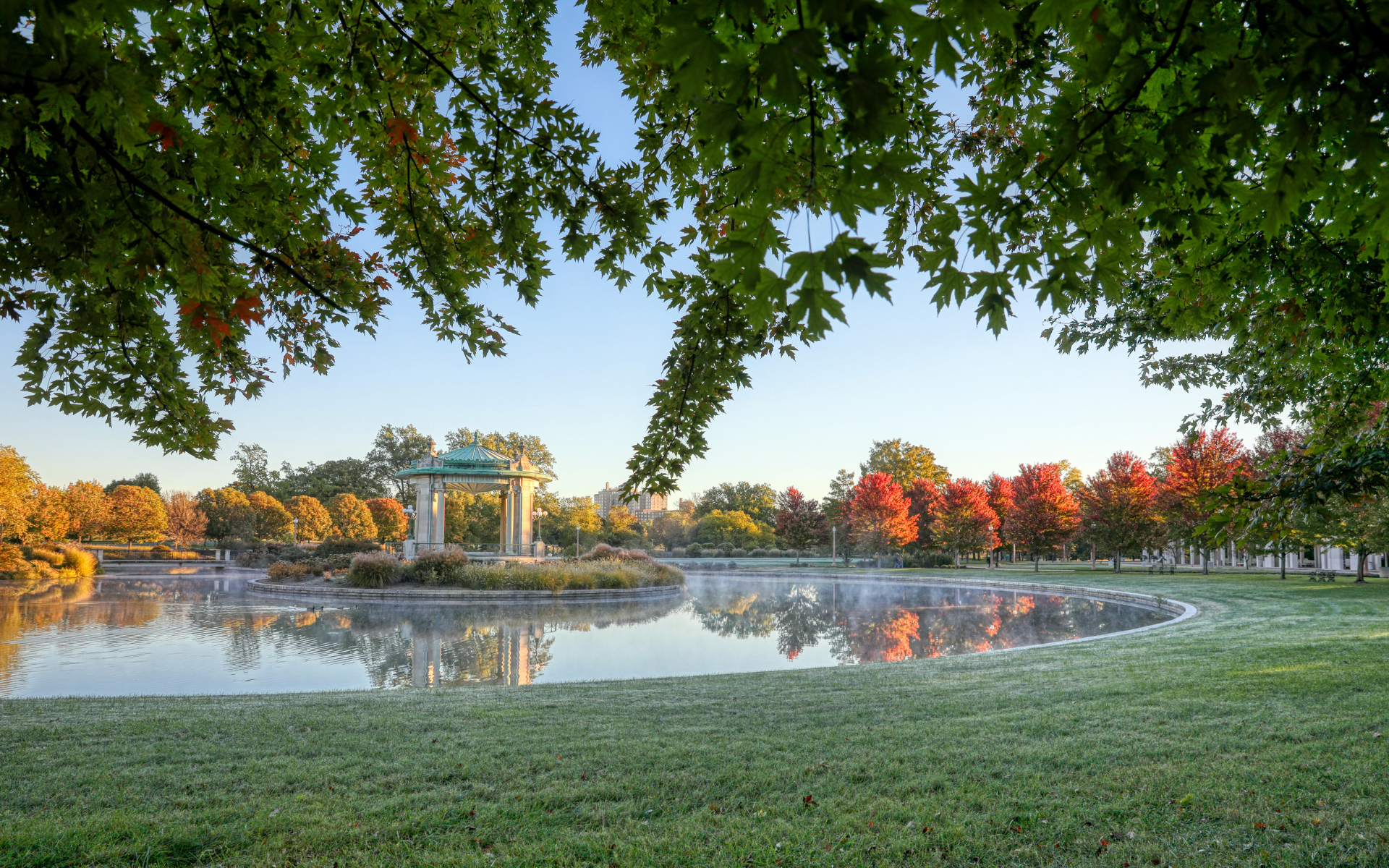
Forest Park is not just a city park. It is one of the true centerpieces of life here.
Located within St. Louis City, Forest Park spans roughly 1,400 acres, making it even larger than Central Park in New York. It draws people from all over the region because it packs an incredible amount into one place.
Within the park, you will find:
- The Saint Louis Art Museum
- The Saint Louis Zoo
- The Missouri History Museum
- The Science Center and planetarium
- The Muny amphitheater
- A dramatic waterfall
What really makes Forest Park special is not just the size or the beauty. It is the access. So many of its major attractions are free, which is a huge benefit for families, students, and anyone who wants a full day out without a major price tag.
For anyone considering Moving to St. Louis, Forest Park is one of those places that quickly explains why people love living here.
6. Sports Are Part of the Culture
St. Louis takes sports personally, in the best possible way.
The city’s sports culture is passionate, communal, and woven into everyday life. During the Blues’ 2019 Stanley Cup run, the song “Gloria” became a citywide anthem. It was everywhere. Kids knew it. Adults knew it. It became part of the shared emotional soundtrack of the moment.
And then there are the Cardinals. You do not have to live here long to realize baseball is not just a pastime in St. Louis. It is part of the civic identity.
If you like living in a place where people genuinely rally around their teams, this city delivers.
7. Learning St. Louis Pronunciations
One of the most entertaining parts of moving here is learning how locals pronounce street names and place names that look French on paper but sound unmistakably Midwestern in practice.
You may see names that seem straightforward if you use standard French pronunciation, but that is not how they are usually said here. St. Louis puts its own spin on them, and learning those local pronunciations is a surprisingly effective way to sound like you belong.
Names that often trip people up include places like:
- Gravois
- Creve Coeur
- Chouteau
- Bellefontaine
- Des Peres
- Ladue
The spellings may look French, but the local delivery is pure St. Louis.
8. Understanding St. Louis Weather
St. Louis has distinct seasons, which many people love. You get spring, summer, fall, and winter in a very real way.
The catch is that the weather can be unpredictable. Conditions can swing fast, and sometimes it feels like the seasons are competing with one another over the course of a couple of weeks.
That means if you are moving here, it is smart to be ready for variety. Warm sunshine, dramatic storms, chilly mornings, and sudden seasonal shifts are all part of the package.
9. What Locals Mean by “Going to the Lake”
In St. Louis, when someone says they are going to the lake, they usually mean one place: Lake of the Ozarks.
There is not a major lake right next to St. Louis, so this phrase usually means a weekend getaway. People are leaving town early, making the roughly three hour drive, and heading for boating, swimming, sun, and all the summer energy that comes with it.
It is one of those regional habits that makes more sense once you have lived here a little while. Soon enough, you may find yourself saying it too.
10. Choosing the Right St. Louis Neighborhood
One of the biggest strengths of Moving to St. Louis is variety.
St. Louis City has more than 79 neighborhoods, and St. Louis County includes 88 separate municipalities. That is a lot of different personalities, layouts, price points, and lifestyles packed into one metro area.
That variety means there is no single St. Louis experience. Some places are walkable and historic. Some are suburban and highly residential. Some are full of restaurants and nightlife. Others are quiet and family oriented.
This is why relocating here is rarely about choosing “St. Louis” in the abstract. It is about finding the specific neighborhood or municipality that fits your day to day life.
When searching, it helps to think about:
- School district preferences
- Commute patterns
- Neighborhood feel
- Access to parks, restaurants, and shopping
- Whether you want city energy, suburban space, or something in between
Why this all matters when moving to St. Louis
Moving to St. Louis is easier when you understand the local language, culture, and geography ahead of time. This is a city with a strong sense of identity, but it is also a region with a wide range of ways to live.
You have separate city and county systems, a metro area that stretches well beyond the core, a food culture with its own legends, one of the country’s best urban parks, fiercely loyal sports fans, and neighborhoods that can feel completely different from one another.
That is part of the charm. St. Louis is not one-note. It has layers.
Final thoughts
If you are seriously considering Moving to St. Louis, the best approach is to get familiar with the region as a whole and then narrow down the neighborhoods that fit your lifestyle. The city has a lot more variety, character, and amenities than many people expect.
And once you have had toasted ravioli, argued about St. Louis style pizza, learned how to pronounce the street names, and spent an afternoon in Forest Park, it starts to feel a lot less like a mystery and a lot more like home.
Frequently Asked Questions About Moving to St. Louis
IS ST. LOUIS A GOOD PLACE TO LIVE?
St. Louis offers affordable housing, diverse neighborhoods, strong cultural institutions, and a lower cost of living than many major metros. The city offers excellent food, arts, sports culture, and green space — with urban amenities that are hard to match at this price point.
WHAT SHOULD I KNOW BEFORE MOVING TO ST. LOUIS?
Understanding the city-county divide is the first thing. St. Louis City and St. Louis County are separate government entities with different school systems, elected officials, and services. Beyond that, think regionally — the metro stretches into Illinois and St. Charles County, and many people commute across th4hose boundaries every day.
WHAT ARE THE BEST NEIGHBORHOODS IN ST. LOUIS?
It depends entirely on your lifestyle, budget, commute, and school preferences. Shaw, Tower Grove South, Central West End, and Benton Park appeal to buyers who want walkable city neighborhoods with architectural character. Clayton and University City offer a suburban feel with strong school districts close to the urban core. Kirkwood and Webster Groves are perennial favorites for buyers who want tree-lined streets and a genuine small-town feel inside the metro. A good buyer’s agent will help you match the neighborhood to your life — not just your price point.
WHAT ARE THE BEST SUBURBS OF ST. LOUIS?
Kirkwood, Webster Groves, Ladue, Town and Country, and Des Peres consistently rank among the most desirable suburbs. Each has its own personality: Kirkwood and Webster lean historic and walkable; Ladue and Town and Country skew toward larger lots and higher price points; Des Peres sits in a strong school district corridor with easy highway access. St. Charles County communities like O’Fallon and Wentzville draw buyers looking for newer construction and more space per dollar.
HOW EXPENSIVE IS IT TO LIVE IN ST. LOUIS?
Compared to most major U.S. metros, St. Louis is genuinely affordable. Median home prices are well below the national average for comparable square footage and neighborhood quality. The overall cost of living — groceries, utilities, dining out — also runs moderate, making St. Louis one of the better values among large American cities.
WHAT IS THE ST. LOUIS CITY-COUNTY DIVIDE AND WHY DOES IT MATTER?
In 1876, St. Louis City separated from St. Louis County and has operated as an independent city ever since. They have separate governments, tax structures, school systems, and elected officials. For homebuyers, the practical implication is that your address determines which school district, police jurisdiction, and municipal services you fall under — so it is worth understanding before you start your home search.
WHAT ARE THE BEST SCHOOL DISTRICTS IN THE ST. LOUIS AREA?
Several districts consistently draw buyers to specific parts of the metro. School district boundaries don’t always align with city or zip code lines, and district boundaries sometimes change, so it’s important to verify the district for any specific address during your home search.
Niche School District Ratings
St. Louis Magazine Private School Handbook
WHAT IS THE WEATHER LIKE IN ST. LOUIS?
St. Louis has four distinct seasons. Summers are hot and humid. Winters bring cold spells and occasional ice and snow. Spring and fall are beautiful but can shift quickly. Severe weather — thunderstorms and occasional tornado watches — is part of summer life. A good coat, an umbrella, and a weather app are year-round essentials.
WHAT FOODS IS ST. LOUIS KNOWN FOR?
Toasted ravioli, gooey butter cake, and St. Louis-style pizza made with Provel cheese are the local icons. The waffle cone also traces its origin story to the 1904 World’s Fair in St. Louis. Beyond the classics, the dining scene is diverse and interesting, with Cherokee Street known for Mexican food, South Grand for global cuisine, and standouts like Balkan Treat Box, The Little Fox, and Annie Gunn’s across the metro.
HOW FAR IS ST. LOUIS FROM LAKE OF THE OZARKS?
Lake of the Ozarks is about two and a half to three hours from St. Louis by car, depending on your starting point in the metro. That distance makes it a very manageable weekend trip, which is why heading to the lake is practically a summer ritual for St. Louis residents.
DOES ST. LOUIS HAVE GOOD PARKS AND OUTDOOR SPACES?
Forest Park alone would answer this question. At roughly 1,400 acres — larger than Central Park in New York — it’s home to the Saint Louis Zoo, Saint Louis Art Museum, Missouri History Museum, The Muny, and the Science Center, most of which are free. The region also has an extensive network of trails, parks, and green corridors, plus the Gateway Arch National Park along the riverfront.
HOW DO YOU PRONOUNCE ST. LOUIS STREET NAMES?
French-origin street names get a distinctly Midwestern delivery in St. Louis. Gravois is pronounced GRAV-oy. Chouteau is SHOH-toe. Des Peres is deh-PEAR. Ladue is lah-DOO. Creve Coeur is kreev-CORE. Learning these pronunciations is a quick way to signal that you know the city.
Dawn Griffin leads the Dawn Griffin Group at eXp Realty, a top-producing real estate team serving St. Louis City and County, St. Charles County, and the surrounding region. If you’re exploring what life could look like in a new St. Louis home — or thinking about what your current home is worth — we’d love to talk.