
Posted by Dawn Griffin
Match Day Guide for Medical Residents Moving to St. Louis
Match Day is more than just a career milestone—it’s the start of a whirlwind relocation to a new city. If you’ve matched at world-class institutions like Washington University (WashU), BJC HealthCare, or Saint Louis University (SLU), congratulations! You are joining a premier medical community in a city that truly caters to the resident lifestyle.
St. Louis is a “hidden gem” for medical trainees, offering an unbeatable combination of affordability, short commutes, and elite amenities. Whether you’re looking for a walkable urban flat in the Central West End just steps from the hospital, or a charming historic home in Tower Grove near the nation’s #1 ranked city park, finding the right neighborhood is the key to surviving and thriving during your intern year.
In this guide, we break down everything you need to know about moving to St. Louis for residency—from the top 7 neighborhoods favored by current trainees to the award-winning international food scene that will fuel your post-call weekends.
Getting Started—Look for Housing Early
When you search for an apartment or house right away, you’ll have more options and improve your odds of being able to move in within the time frame you desire. All of the other people who matched to St. Louis will be looking for housing. You don’t want to run the risk of having to wait to move until after your residency starts when you will be extremely busy. If you plan to buy, target your search to start in April or May to allow enough time for closing, inspections, and moving.
Determine Your Budget and Loan Options
Many who came to St. Louis for medical training elect to stay in St. Louis afterward. In St. Louis, you can own a home for roughly $1,500–$1,800 per month for a median-priced home (~$235k–$260k), though starter homes can be found for lower payments. It often makes financial sense to buy instead of renting. Different banks offer mortgage loan programs for residents or new doctors that take into account your student loan debt. So ask about all the options available.
Find the Right Realtor
To ensure a seamless transition into your residency, it is vital to partner with a realtor who is not only a neighborhood expert but also deeply familiar with the nuances of physician loans and the demanding nature of a residency schedule. While online research is a start, a specialized agent provides the first-hand knowledge and flexibility required to navigate hospital commutes and tight timelines, ultimately securing a home that aligns with both your professional and personal life.
The Top 7 Neighborhoods for St. Louis Medical Students
Commute time and budget are usually the biggest decision factors for those moving to St. Louis for medical residency. Having a shorter commute to the hospital will give you more time to relax between shifts and enjoy the amenities that may be near your new home. And if you are working long shifts, you don’t want to have to drive a long way when you are tired. Some actually do choose to move 15-20 minutes away because the commute provides time to clear minds after work. So think about what is most important to you. Here are the most popular neighborhoods for physicians matched to St. Louis.
1. central west end
This is the “default” choice for WashU/BJC residents. It is an urban, walkable neighborhood directly adjacent to the medical campus.
The Vibe: European-style sidewalk cafes, historic architecture, and high-rise luxury apartments.
Why Residents Love It: You can walk to the hospital, Whole Foods, and Forest Park. It has the most “big city” feel in St. Louis.
Commute: 0–10 minutes (walking/biking).
Central West End Neighborhood Guide
2. DeBaliviere Place & Skinker-DeBaliviere
Located just north of Forest Park and west of the Central West End, these sister neighborhoods are a “best-kept secret” for WashU and BJC residents.
The Vibe: A mix of grand historic boulevards and high-density, modern luxury apartments. It feels more residential and “chill” than the CWE but is rapidly developing its own retail scene.
Why Residents Love It: It offers a “greater bang for your buck” than the CWE. You get the same Forest Park access and a very easy commute without the “big city” noise. It’s home to a high concentration of fellow grad students and medical trainees.
The Commute: 5–10 minutes. Most residents here utilize the MetroLink (only 1–2 stops to the hospital) or the WashU Med Shuttle, which runs late into the night—a huge safety perk for those finishing late shifts.
The History of Debaliviere Place
3. Tower Grove South / Shaw
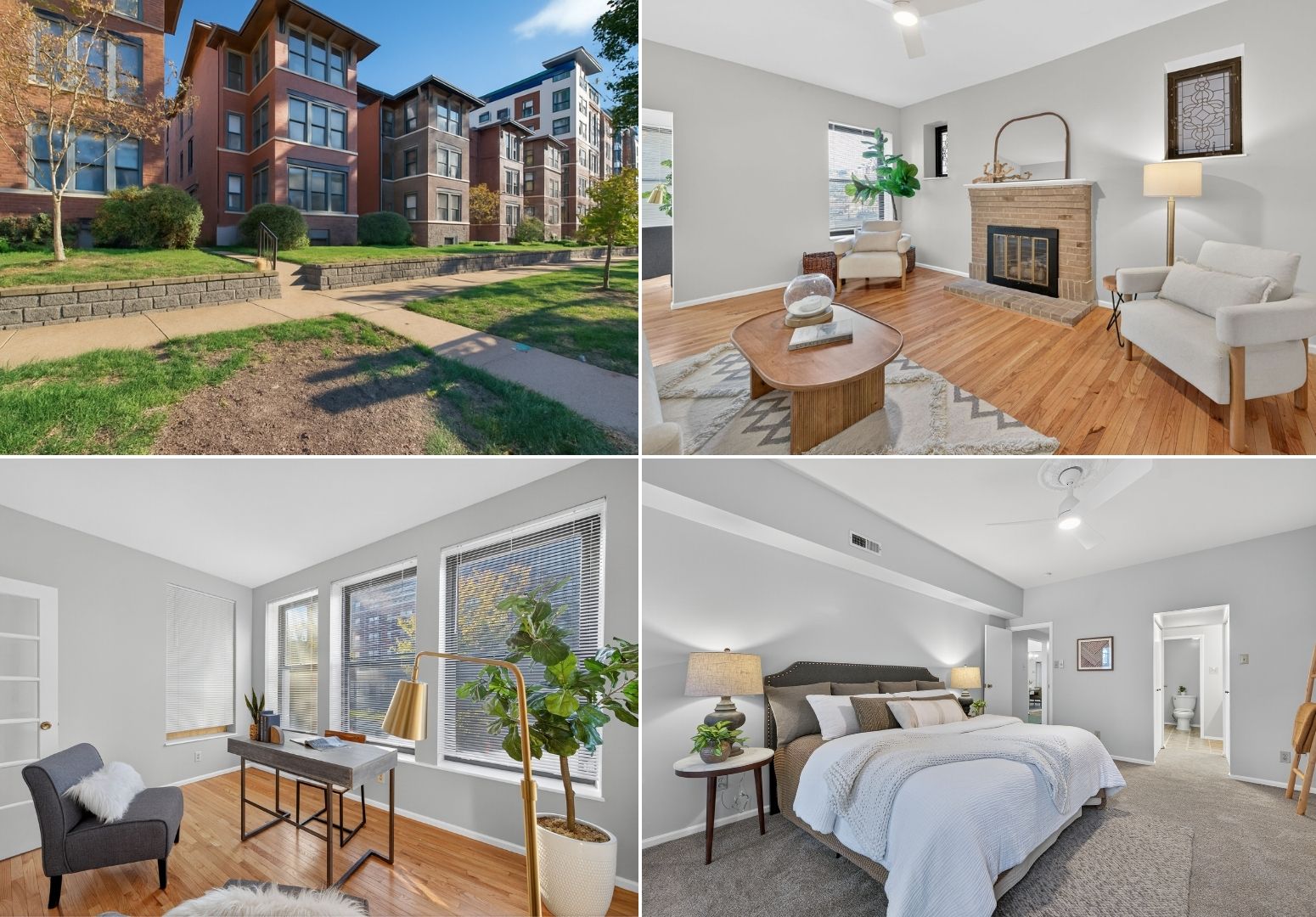
These sister neighborhoods are located just south of the SLU medical campus and a short drive from BJC.
The Vibe: Historic brick rehabs, independent coffee shops, and the best “international” food scene (along South Grand).
Why Residents Love It: It’s centered around Tower Grove Park, which is arguably the most beautiful park in the city. It’s very popular for residents with dogs or those looking to rent/buy a whole house rather than an apartment.
Commute: 10–15 minutes (driving).
Tower Grove South Neighborhood Guide
Historic Shaw Neighborhood Guide
4. demun / clayton
Located on the western edge of Forest Park, DeMun is technically in the suburb of Clayton but feels like a cozy urban pocket.
The Vibe: Charming, tree-lined, and very safe. It feels like a storybook neighborhood with local spots like Clementine’s Creamery and Kaldi’s Coffee.
Why Residents Love It: It offers a quieter, “grad student” atmosphere compared to the CWE, but you’re still right on the park.
Commute: 8–12 minutes (driving through Forest Park).
Clayton / DeMun Neighborhood Guide
5. Forest Park Southeast / The Grove
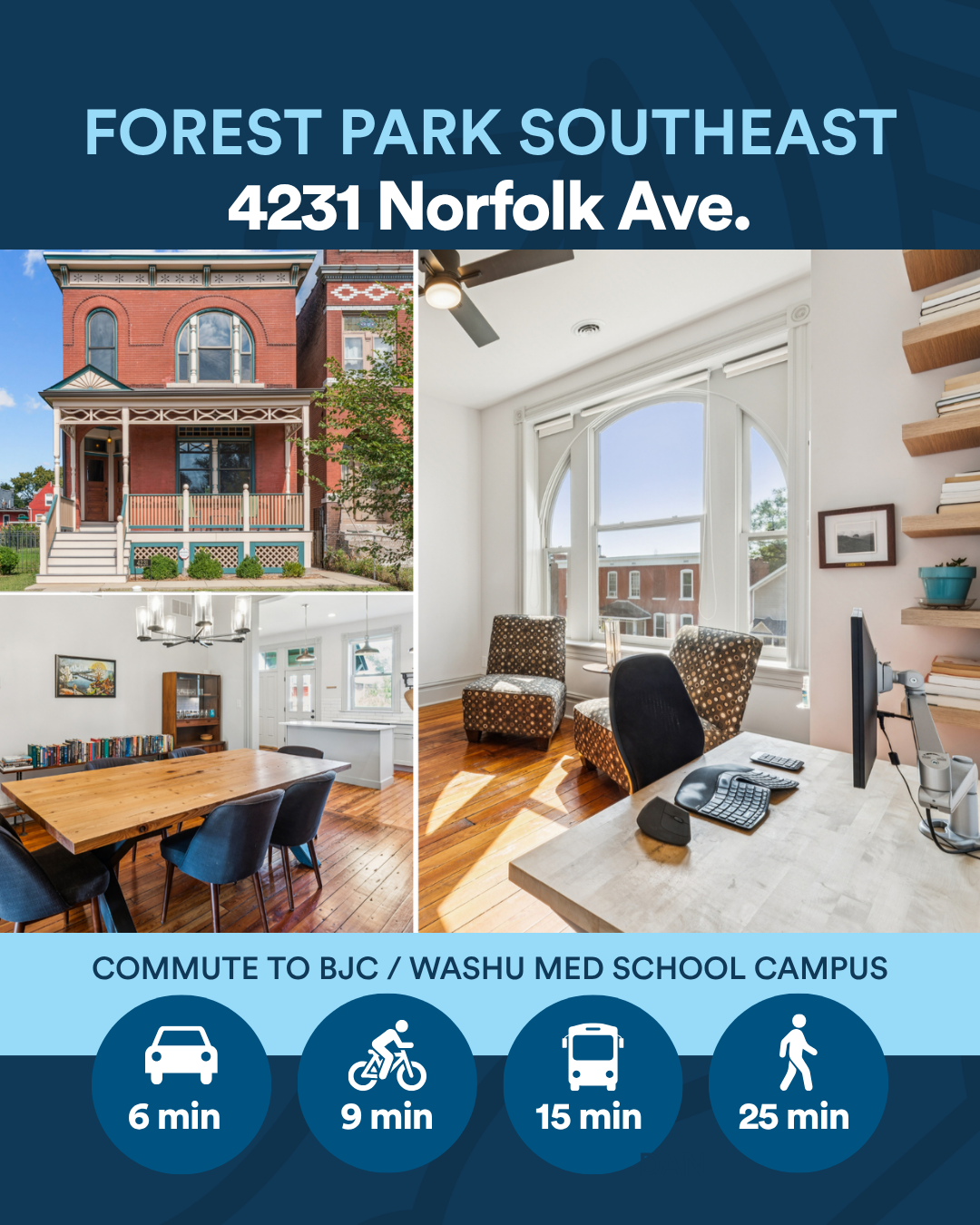
This neighborhood has exploded in popularity over the last few years and is located directly south of the WashU medical campus.
The Vibe: Funky, vibrant, and the heart of the city’s nightlife and LGBTQ+ scene.
Why Residents Love It: It’s home to many newer “amenity-heavy” apartment complexes. It’s incredibly close to BJC—many residents living on the northern edge of The Grove can still walk to work. Those on the southern edge enjoy a quieter existence but are still close to everything they need..
Commute: 3–7 minutes (driving/biking).
6. Dogtown
Named for its deep Irish roots, Dogtown is located just south of the Zoo/Forest Park.
The Vibe: A down-to-earth, residential feel with local pubs and “mom-and-pop” restaurants.
Why Residents Love It: It’s more affordable than the CWE or Clayton but remains centrally located. It’s perfect for residents who want a backyard for a grill or a dog without moving to the far suburbs.
Commute: 10 minutes (driving).
7. Maplewood / Richmond Heights
If you want to be near the action but slightly removed from the “city” hustle, these are the top choices.
The Vibe: Suburban-lite. They have walkable “Main Street” areas (Sutton Blvd in Maplewood) with breweries and shops but more parking and lower crime rates.
Why Residents Love It: Great value for the space. These areas also sit right on the MetroLink (light rail) line, which drops you off directly inside the BJC or SLU medical centers.
Commute: 12–18 minutes (driving).
Create a Support Network
There are loads of cultural amenities and things to do in St. Louis. Exploring the city with fellow residents who are also new to town can be a great way to deal with the challenges of moving. So connect with those in your program and check out all that St. Louis has to offer.
- Forest Park: Voted #1 “Best City Park” in the U.S. (2024 & 2025) — For two years running, Forest Park has taken the top spot in USA Today’s 10Best rankings, beating out New York’s Central Park.
Why it matters: It is literally the “backyard” for WashU/BJC residents. At 1,300+ acres, it contains the Zoo, Art Museum, Science Center, and Missouri History Museum—all of which have free admission.
The Resident Take: Whether you need a 3-mile “decompression run” after a shift or a free date night at the Art Museum, having the nation’s best park across the street from the hospital is a massive quality-of-life perk. - St. Louis Receives “10-Minute Walk” Park Equity Award (2025) — St. Louis was recognized because 98% of its residents live within a 10-minute walk of a public park, one of the highest scores in the country for any major metro area.
Why it matters: Whatever neighborhood you pick, you won’t have to drive 20 minutes to find a trail or a green space to touch grass and reset your brain. - Food & Wine Names St. Louis “The Next Great Food City” (2022)
- Voted the #2 “Best Beer City” in the U.S. (2025 & 2026)
Summary
Ready to call the Gateway City home? Whether you need a 5-minute walk to the BJC campus or a backyard in Dogtown, we’ll help you find a space that works for your residency schedule and your budget. Connect with us to kickstart your St. Louis relocation.