Andrea Durway April 13, 2016
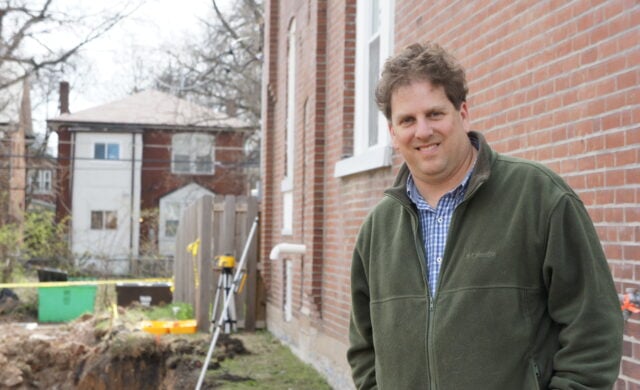
A unique collaboration is being formed by a team of students and faculty members from Washington University and a local housing developer known for energy efficient building practices. The Washington University team is using M. Jaffe Group’s development, McPherson Place, as the prototype community for their entry in Race to Zero, an annual competition open to any interested collegiate institution and sponsored by The Department of Energy (DOE). The competition is based upon a real-world scenario where a builder is developing a new high performance home product line or needs to update an existing product line (house plan) to a high-performance house design. College teams are posed with a design problem and are asked to either create a new design that satisfies the project requirements or redesign an existing floor plan.
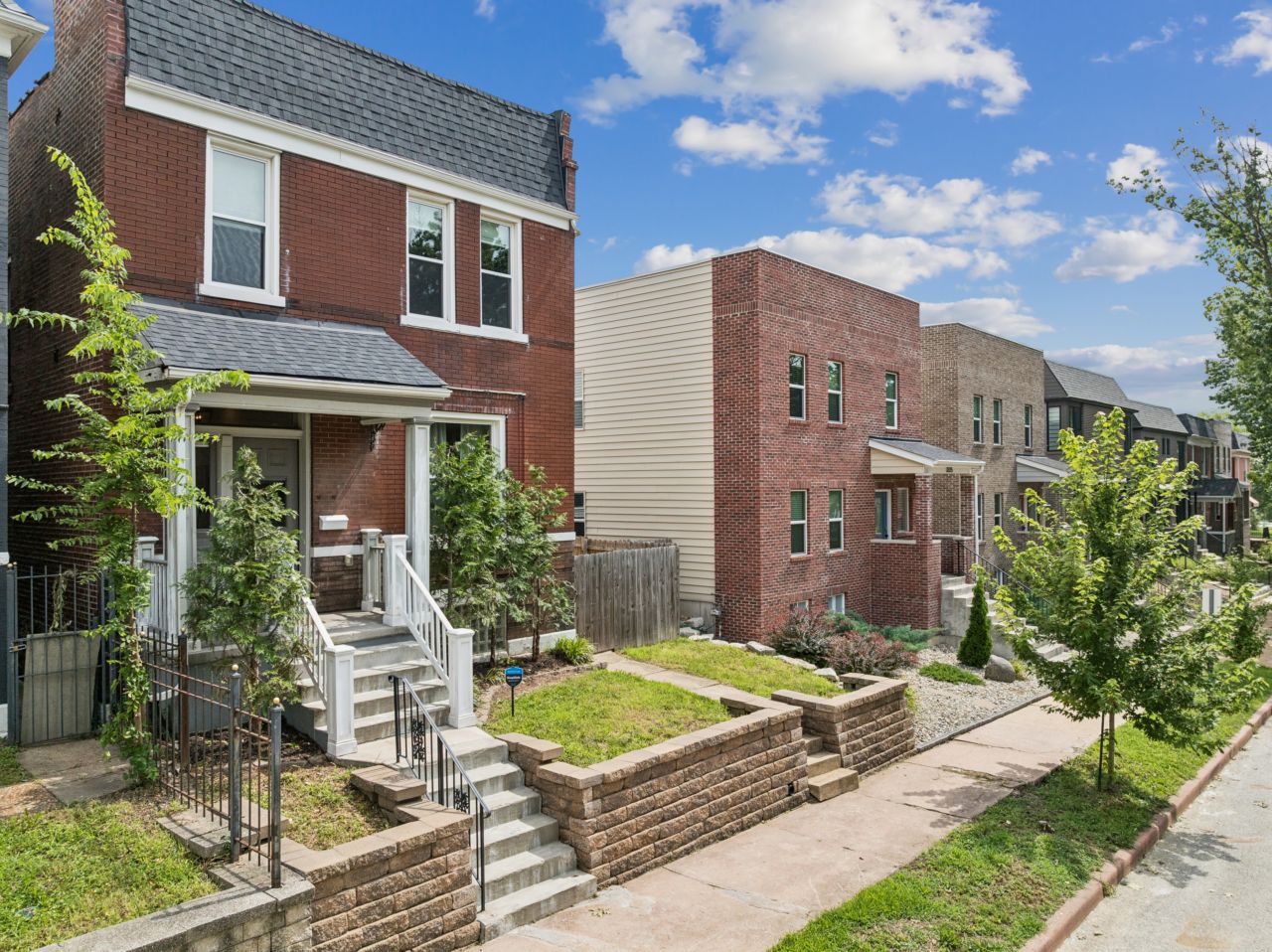
In 2001, Jaffe began assembling land on the 5700 block of McPherson, once Skinker-DeBaliviere’s emptiest block, with nearly half of its parcels being vacant lots. There are now 26 single family homes completed as part of McPherson Place. Five units remain with four under construction and one lot open. From the curb, their features blend with the nearby historic architecture. Inside, they offer high quality new construction that is difficult to come by in the city. Contributing to the success of McPherson Place is the utilization of sustainable practices, green products, and high-performance technologies in building design and construction.
“We’ve focused on energy efficiency since the beginning. Not being wasteful is core to our philosophy,” says Jaffe.
Jaffe was approached in January by Hongxi Yin, an I-CARES associate professor at the Sam Fox School of Design and Visual Arts, about using McPherson Place for his student’s entry in the Race to Zero. The early adoption of green innovations on McPherson Place made it a natural choice, where the Jaffe Group has continuously applied new methods and products that have evolved over the last ten years. The Race to Zero competition will expand upon those efforts.
“Zero Energy Ready Homes have become readily achievable and cost effective. By definition, these high-performance homes are so energy efficient that renewable power can offset most or all the annual energy consumption.”
Washington University was one of 34 teams from 27 collegiate institutions invited to compete. An intense 10 weeks of research and development by 12 students and two faculty advisers went into the proposal. The resulting WUSTL Resilient Home, is a precast concrete home that meets both the DOE Zero Energy Ready Home criteria, as well as The Sustainability Plan by the city of St. Louis. This coming weekend, April 16-17, five students will present the Washington University plan at the National Renewable Energy Laboratory (NREL) in Golden, Colorado in hopes of bringing home a win.
Much of the team’s work will be used as a basis for Washington University’s entry in the DOE’s Solar Decathlon in 2017. “That is a really prestigious and important competition that happens every other year,” says Yin. Solar Decathlon teams compete in 10 different contests—ranging from architecture and engineering to home appliance performance—while gaining valuable hands-on experience in clean energy design. The winner of the competition will be the team that best blends affordability, consumer appeal, and design excellence with optimal energy production and maximum efficiency. For the first time in the competition’s history, the Solar Decathlon 2017 teams will be competing for $2 million in prize money.
If the team wins the Solar Decathlon, they hope to construct the winning design on the northern edge of the university and allow the community at large to tour the building to see first-hand how attractive and cost effective solar energy building can be.
We will be following the team and continuing to share news on the blog about their effort. In the interim, if you would like to tour one of the current McPherson Place homes, please don’t hesitate to contact us.
Stay up to date on the latest real estate trends.

September 2026 housing numbers and what home buyers and sellers need to know.

Many local butcher shops are longtime neighborhood institutions that still offer something increasingly difficult to find at a supermarket: personal service, specialty… Read more

Recognition
The Dawn Griffin Group is named St. Louis Magazine's Best Real Estate Agent for the third year in a row.
Halfway into the first full season, here are some things I've learned about pool ownership.

Save Big By Finding Dates, Eligible Items and Shopping Limits
New shops and restaurants in downtown Kirkwood and beyond
3329 Vista Avenue sits in a neighborhood that has been rewritten, quite literally, more times than almost any other pocket of the city.

We regularly use these same resources to help our clients before, during, and long after closing.

Here are seven of the most popular St. Louis first-time homebuyer programs available.
Partner with a team that values honest advice, strategic guidance, and exceptional service. With decades of experience and over 1,000 successful transactions, we're committed to helping you achieve your real estate goals with confidence.
Planning a move? Thinking about selling? Want to talk real estate?
Dawn Griffin Group
3636 S Geyer Rd Ste #100 St. Louis, MO 63127