

Posted by Dawn Griffin
5 Places to Truly Disappear Within 3 Hours of St. Louis
We live in one of the most underrated cities in America. St. Louis has world-class museums, extraordinary architecture, an incredible food scene (great news just this week!), and neighborhoods with more character per block than most cities dream of. I love this place deeply.
And sometimes, I need to leave it.
Not forever. Just for a weekend, or even a long day. A place where the notifications stop, the horizon is unobstructed, and the loudest thing around is the wind or a river moving over rocks. If you’ve been craving that kind of reset, the good news is you don’t have to drive far. Some of Missouri’s most spectacular natural escapes are sitting right outside our backdoor, most of them within a tank of gas.
Here are five places where you can truly go off the grid. No crowds, no agenda, just nature doing what it’s been doing for millions of years.
1. Castor River Shut-Ins (Amidon Memorial Conservation Area)
~1 hour 45 minutes southeast | Madison County, MO
Most St. Louisans have heard of Johnson’s Shut-Ins. Far fewer have been to the Castor River Shut-Ins — and that’s precisely why this one belongs on this list.
Tucked inside the 1,878-acre Amidon Memorial Conservation Area near Fredericktown, the Castor River Shut-Ins are Missouri’s only pink granite shut-ins, and the color alone will stop you in your tracks. The rock here glows a luminous salmon-pink — formed by volcanic activity 1.5 billion years ago, shaped over millennia by the clear waters of the Castor River cutting through narrow chutes and canyon-like walls. Locals have called it “Pink Rock” for generations. Once you see it, you’ll understand why.
The shut-ins stretch for just over a half mile, with giant boulders the size of Volkswagens scattered along the riverbed, natural water slides, and pools deep enough for a swim. In May, native azaleas bloom along the rocky banks, adding bursts of pink against the granite. In fall, the crowds thin to almost nothing and the colors reflecting off the wet stone are genuinely otherworldly.
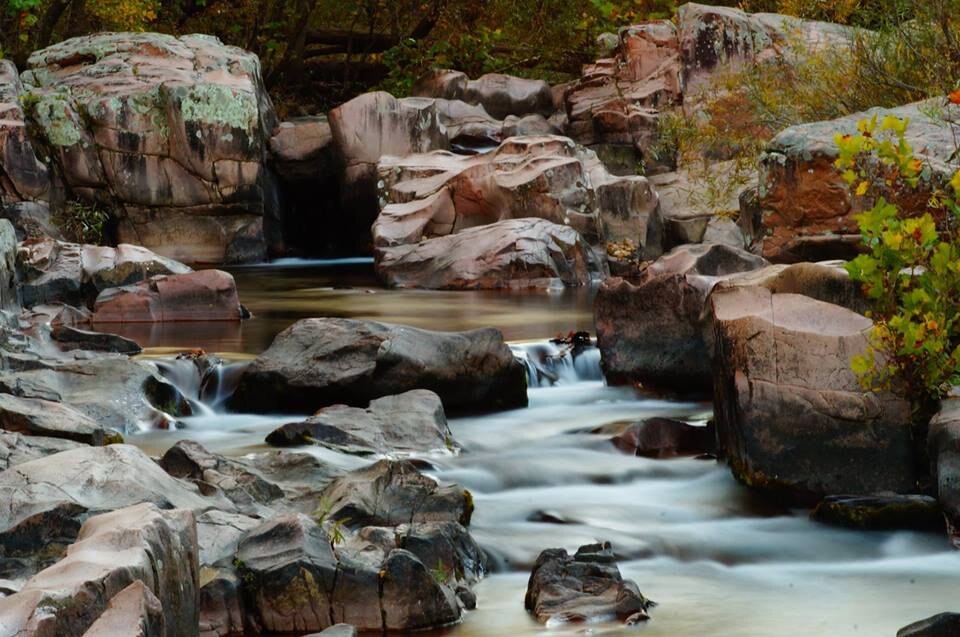
A short, well-maintained trail leads you in from the parking area. From there, it’s pure scrambling: up canyon walls, across boulders, downstream into quieter pools if you want to find solitude. Cell service drops off quickly once you leave the highway. There are no amenities on-site beyond a port-a-potty in season, which is just fine. That’s the whole point.
Nearby, the town of Fredericktown has a surprise worth knowing about. The Station at Sawyer’s Landing is a 1933 Mark Twain National Forest ranger station converted into a coffee shop and bistro. Go before or after, because it’s the perfect bookend to a day in the woods.
Best time to visit: Fall is magical here — swimming crowds are gone, foliage is stunning, and the pink granite practically glows in the lower light. Arrive early in summer if you want elbow room.
2. Hawn State Park & Pickle Creek Trail
~1 hour south | Ste. Genevieve County, MO
Hawn State Park is one of those places that feels hidden even though it isn’t. The star here is Pickle Creek Trail. This 3-mile loop that packs an almost absurd amount of scenery into a short hike. The dramatic sandstone formations, towering bluffs, a waterfall, and creek crossings feel like something out of the Pacific Northwest.
The geology along Pickle Creek is genuinely unlike anything else in the Midwest. You’ll find yourself ducking through narrow rock passages called “the slot,” stepping across mossy ledges, and standing at overlooks that make you momentarily forget you’re in Missouri.
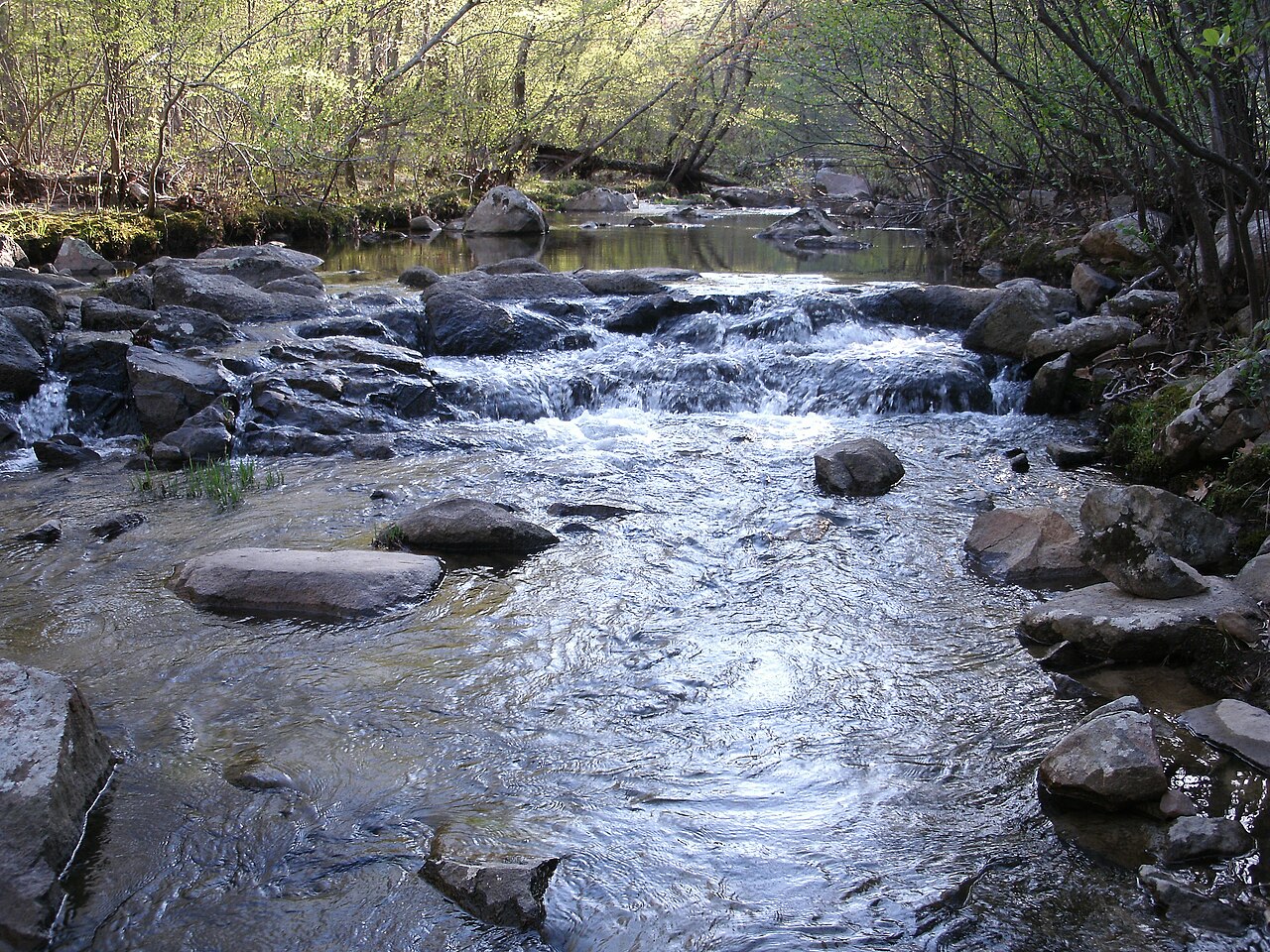
Hawn sits in the heart of Ozark terrain and is far less trafficked than the bigger state parks. The Whispering Pines Trail extends the adventure for those who want a longer day. It passes through shortleaf pine forest, which is increasingly rare in Missouri, and opens onto high ridgeline views.
After your hike, the historic French colonial town of Ste. Genevieve is less than 15 minutes away. It’s one of the oldest European settlements west of the Mississippi. With remarkable architecture and good food, it will reward your effort.
Pro tip: Wear shoes you don’t mind getting wet. The creek crossings are part of the magic.
3. Ozark National Scenic Riverways — Eminence & Current River
~2.5 hours south | Shannon County, MO
Deep in the Missouri Ozarks, the Current River is one of the clearest, coolest, and most pristine waterways in the entire country. The Ozark National Scenic Riverways, America’s first national riverway, protect 134 miles of the Current and Jacks Fork rivers, along with more than 300 freshwater springs that feed them.
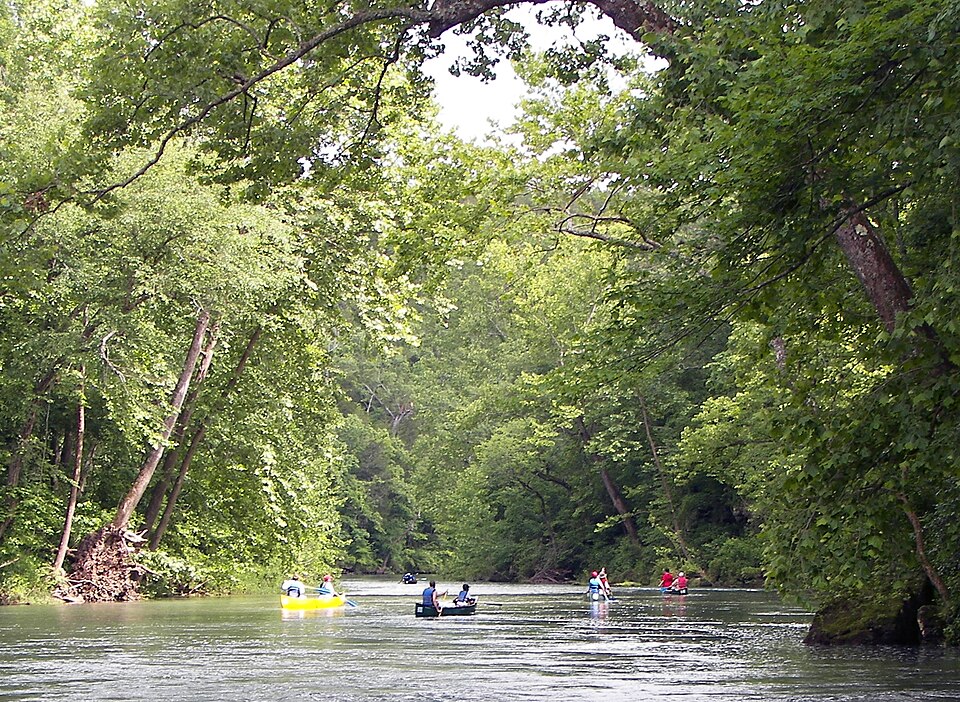
This is float trip country. You can rent a canoe or kayak from any number of outfitters in Eminence. Let the river carry you through canyon-like bluffs, past gravel bars perfect for a midday swim, and beneath canopies of sycamore and oak. The water is fed by springs that maintain a year-round temperature of around 58 degrees. That’s bracing in summer, truly otherworldly on a hot afternoon.
Blue Spring — one of Missouri’s largest — pours out 90 million gallons per day in a color so intensely blue it looks almost artificial. Round Spring has a cave you can tour right alongside the river. Alley Spring, near Eminence, is one of the most photogenic spots in the state. You may recognize its iconic red 1894 mill reflected in a massive turquoise pool.
Echo Bluff State Park, opened nearby in 2016, offers newer cabin lodging overlooking Sinking Creek if you want a comfortable base without sacrificing immersion in the landscape.
What to know: Cell service is essentially nonexistent through much of the riverway. That’s not a bug. It’s the feature.
4. Shawnee National Forest — Garden of the Gods
~2.5 hours east | Southern Illinois
Yes, Illinois gets a mention. That’s because Shawnee National Forest in southern Illinois is genuinely stunning and wildly underappreciated by most St. Louisans. The Garden of the Gods wilderness area, in particular, is a landscape that looks like it was imported from the American Southwest.
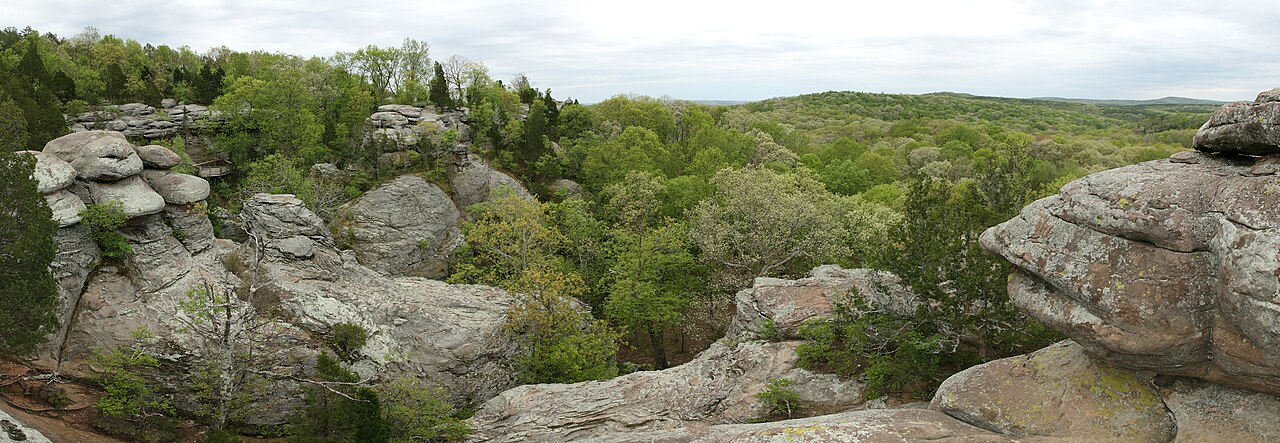
Massive sandstone formations rise out of the forest floor in shapes that seem almost intentional. Balanced boulders, arched outcroppings, narrow ridgeline paths with 360-degree views over the Shawnee Hills. The main observation trail is only about a half mile. However, the Rim Rock Trail extends the experience with canyon views and moss-covered rock formations that feel ancient and cathedral-quiet.
The broader Shawnee National Forest covers 289,000 acres with dozens of trails, several scenic lakes for paddling and fishing. It includes the Bell Smith Springs area. This 8-mile trail system consists of rocky creek beds, natural rock bridges, and sandstone cliffs. In spring, wildflower season here is extraordinary. In fall, the foliage views from the ridgelines are as good as anything in the region.
It’s one of the few places within three hours where you genuinely feel like you’ve landed somewhere that requires an explanation.
Note: Garden of the Gods gets busy on fall weekends — arrive early or aim for a weekday visit.
5. The Glade Top Trail & Mark Twain National Forest
~2.5 hours south | Ozark County, MO
For the most off-the-grid experience on this list, head deep into the Mark Twain National Forest and find the Glade Top Trail. This 23-mile scenic byway winds through some of the most remote landscape in Missouri. The Glade Top is a north-south ridge with open cedar glades that offer sweeping views in every direction. The drive itself is memorable: narrow, winding, and lined with wildflowers in spring and blazing color in fall.
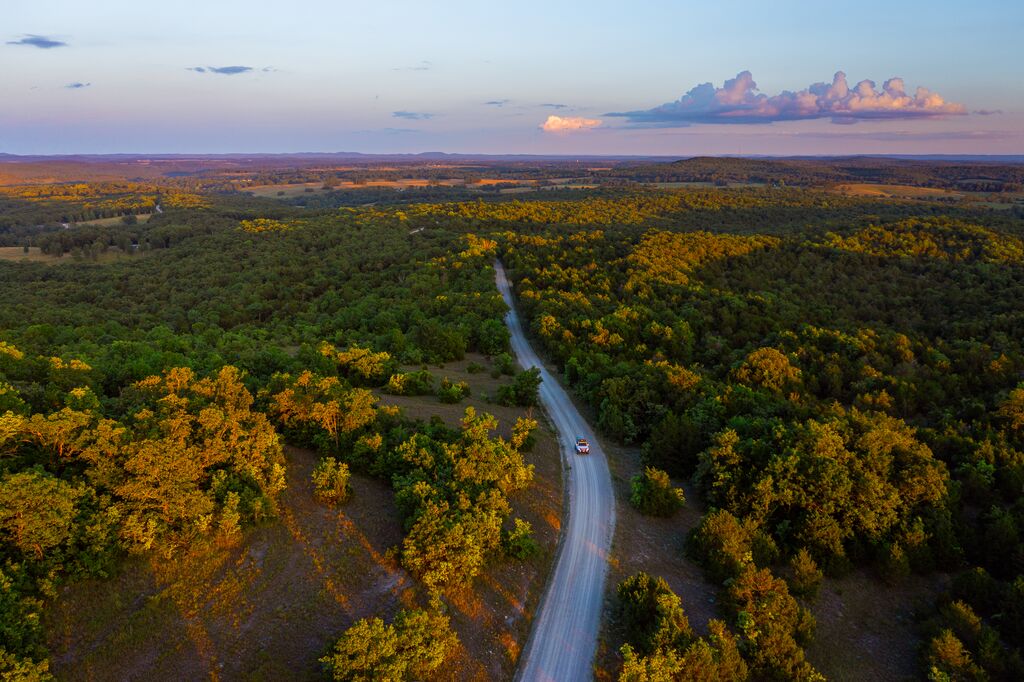
The surrounding forest is a network of rarely-traveled hiking trails, fishing streams, and primitive camping sites where you might not see another person for hours. The sky out here is dark enough for serious stargazing — this area sits near some of the lowest light pollution readings in the entire Midwest.
If you want to stay overnight, consider the Glade Top Fire Tower near Bradleyville. This restored 40-foot fire lookout structure is set on 25 private acres. From the rooftop deck the views go on forever. It’s about as far from your inbox as you can get without getting on a plane.
The small towns of Gainesville and Ava are nearby if you need provisions. Not to mention both have a quiet, genuine character that feels a world removed from suburban St. Louis.
Best time to visit: Mid-October for peak color along the Glade Top is as good as Missouri gets.
One Final Thought
Living in St. Louis means living in a region with remarkable natural depth — in every direction. The Ozarks alone could take a lifetime to explore, and they’re practically in our backyard. If part of what draws you to St. Louis is quality of life, don’t forget that some of the best living happens 90 miles south, on a gravel bar, with the river doing the talking.
These places aren’t just weekend escapes. They’re reminders of what makes Missouri worth coming home to.
Frequently Asked Questions: Nature Getaways Near St. Louis
What are the best nature getaways within 3 hours of St. Louis?
The best nature getaways within 3 hours of St. Louis include the Castor River Shut-Ins (Amidon Memorial Conservation Area) near Fredericktown, Hawn State Park and Pickle Creek Trail near Ste. Genevieve, the Ozark National Scenic Riverways near Eminence, Garden of the Gods in Shawnee National Forest in southern Illinois, and the Glade Top Trail in the Mark Twain National Forest. Each offers a genuine off-grid experience with minimal crowds and no cell service.
Where can I go off the grid near St. Louis?
For a true off-grid escape near St. Louis, the Ozark National Scenic Riverways near Eminence, Missouri is one of the best options — cell service disappears almost entirely once you’re on the water. The Castor River Shut-Ins near Fredericktown and the Glade Top Trail in the Mark Twain National Forest also offer areas with little to no connectivity, wide open skies, and genuine solitude. All are within a 2.5-hour drive from St. Louis.
What is the closest nature escape from St. Louis for a day trip?
The closest nature escapes from St. Louis for a day trip are Hawn State Park (~1 hour south) and the Castor River Shut-Ins near Fredericktown (~1 hour 45 minutes southeast). Both are easy day-trip distances, offer dramatic scenery, and can be paired with a meal in a nearby historic town — Ste. Genevieve for Hawn State Park, or Fredericktown’s Station at Sawyer’s Landing for the Castor River Shut-Ins.
Where is the best hiking near St. Louis?
Some of the best hiking near St. Louis includes Pickle Creek Trail at Hawn State Park (a 3-mile loop with sandstone formations and a waterfall, about 1 hour south), Garden of the Gods in Shawnee National Forest in southern Illinois (dramatic rock formations and canyon views, about 2.5 hours east), and the Horseshoe Glade and Goggins Mountain trails at Johnson’s Shut-Ins State Park. For something less trafficked, the Glade Top Trail area in the Mark Twain National Forest offers remote Ozark ridge hiking with minimal foot traffic.
Are there any hidden gems for nature near St. Louis?
Yes — the Castor River Shut-Ins at Amidon Memorial Conservation Area near Fredericktown, Missouri, is one of the most beautiful and undervisited natural areas near St. Louis. Missouri’s only pink granite shut-ins, the site is free, largely undeveloped, and still relatively unknown outside the region. The Glade Top Trail in the Mark Twain National Forest is another hidden gem — an 18-mile scenic drive through cedar glades with some of the darkest skies in the Midwest and very few visitors compared to state park alternatives.
What is the best time of year to visit nature areas near St. Louis?
Fall (late September through October) is generally the best time to visit nature areas near St. Louis. Crowds thin significantly after Labor Day, fall foliage peaks along the Ozark ridges and river corridors, temperatures are comfortable for hiking, and swimming spots like the Castor River Shut-Ins take on a different, quieter beauty. Spring (April–May) is a close second, especially for wildflower blooms and rushing waterfalls at places like Hawn State Park and the Ozark National Scenic Riverways.
Can I camp near the Castor River Shut-Ins?
Primitive camping is permitted in designated areas of the Amidon Memorial Conservation Area surrounding the Castor River Shut-Ins, though camping is not allowed within the designated Natural Area itself (the shut-ins section). The conservation area is open daily from 4 a.m. to 10 p.m. There are no developed campground facilities — no hookups, no restrooms beyond a seasonal port-a-potty — so come prepared for a true primitive experience.
What should I know before visiting the Castor River Shut-Ins?
Before visiting the Castor River Shut-Ins near Fredericktown, Missouri, know that GPS navigation can route you incorrectly — the most reliable approach from St. Louis is to take Highway 72 east from Fredericktown to Highway J, then Highway W south, following signs for Amidon Memorial Conservation Area. There are no permanent restrooms on site. Wear water shoes — the granite is slick. Cell service drops off quickly after leaving town. Glass containers are prohibited within the Natural Area. The site is free and managed by the Missouri Department of Conservation.
Dawn Griffin leads the Dawn Griffin Group at eXp Realty, a top-producing real estate team serving St. Louis City and County, St. Charles County, and the surrounding region. If you’re exploring what life could look like in a new St. Louis home — or thinking about what your current home is worth — we’d love to talk.