
Posted by Dawn Griffin
Buying a Home in St. Louis: What Move-Up Buyers Need to Know in 2026
Buying a home in St. Louis right now isn’t the simplest decision — and most people considering a move already know that. Mortgage rates have hovered in the mid-6% range, inventory in many neighborhoods remains tight, and if you’re sitting on a home you bought at a lower rate a few years ago, the idea of giving that up can feel like a hard sell, even to yourself. These are real considerations, not just noise. But for move-up buyers who are ready, the St. Louis market still has a strong case to make.
What we’ve seen working with buyers across the metro is this: the people who wait for perfect conditions often look back and wish they’d moved sooner. Timing the market is nearly impossible. Positioning yourself well, and making thoughtful decisions with the information you have, is very much within reach. If you have equity, if your needs have changed, if you’ve been eyeing a neighborhood or a price point that feels like the next chapter — this post is for you.
Here’s what the data and our experience actually say.
You Likely Have More Equity Than You Realize — a Key Advantage When Buying a Home in St. Louis
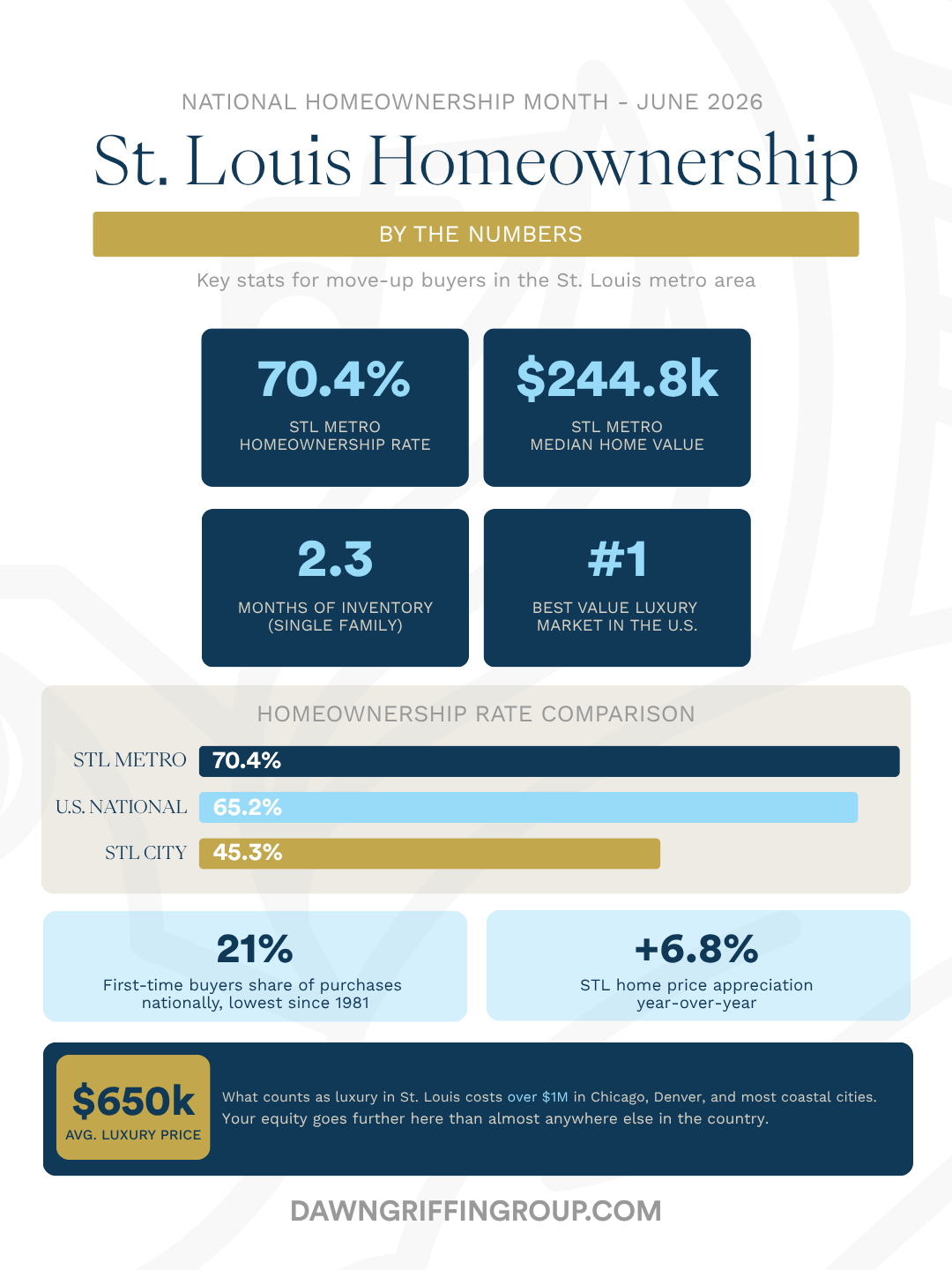
Home values in the St. Louis metro have climbed steadily. The median property value across the metro area reached $244,800 in 2024, up over 5% from the year before. If you’ve owned your home for three or more years, you’ve almost certainly built meaningful equity.
That equity becomes your down payment, your rate-buy-down tool, or your leverage on your next purchase. It’s real money, and it doesn’t grow by sitting still.
St. Louis Is One of the Most Affordable Luxury Markets in the Country
If you’re considering a move up in price point, St. Louis has a genuine structural advantage. What qualifies as luxury here — typically around $650,000 — would cost well over $1 million in Chicago, Denver, or virtually any coastal city. Your equity goes further here than almost anywhere else in the country. The home in the $750,000 range that feels aspirational today? In most major metros, that’s a starter luxury condo. In St. Louis, it can be a lasting, generational home.
The broader Midwest is having a moment, and the numbers back it up. After decades of out-migration, the region posted a net gain of about 16,000 domestic migrants in the year ending June 2025 — a dramatic reversal from 2022, when the Midwest lost more than 175,000 residents to other parts of the country. Zillow’s hottest housing markets of 2025 were dominated by affordable Midwest cities, and NAR’s own economists noted that the Midwest was the only U.S. region where every single state recorded population gains in 2025. People are recalculating. The math on coastal and Sun Belt living has shifted, and affordable metros with strong communities and a realistic path to homeownership are winning. St. Louis fits that description well.*
Why Buying a Home in St. Louis Still Makes Sense Even With Higher Rates
Yes, rates are higher than they were at the pandemic-era lows. But buyers who are moving forward aren’t ignoring that fact. They’re working around it strategically.
Some are negotiating seller concessions to buy down their rate at closing. Others are using their equity to put more down and reduce their monthly payment. Many are accepting that they may refinance when rates shift — because the home they want exists today, and waiting means more time in a space that no longer fits their life.
Rates change. The right home at the right moment is rarer.
What Move-Up Buyers Should Know About Inventory When Buying a Home in St. Louis
With only about 2.3 months of single-family inventory in the St. Louis market, well-priced homes in desirable areas move quickly. That sounds like a headache. But for a prepared buyer — one who is pre-approved, clear on their goals, and working with an agent who knows the market well — low inventory means less competition when the right home appears.
Sellers in this market are motivated. Homes aren’t sitting. Serious buyers get cleaner transactions and less of the prolonged back-and-forth that defined earlier market cycles.
Buying a Home in St. Louis Is Still One of the Most Powerful Ways to Build Wealth
The National Association of REALTORS® is clear on this: homeownership is one of the most effective tools available for long-term financial stability and wealth building. Not just for today, but for the people who come after you.
The home you move into now builds equity over time. It provides stability. And it anchors the kind of life that’s hard to put a price tag on — the neighborhood, the yard, the address that becomes part of your family’s story.
That’s what National Homeownership Month is really about. Not just the transaction, but what the transaction makes possible.
Frequently Asked Questions About Buying a Home in St. Louis Right Now
Is it worth buying a home in St. Louis in 2026?
For buyers who are financially ready, St. Louis remains one of the strongest value markets in the country. Home prices are appreciating steadily, inventory is limited (which supports values), and the region’s affordability relative to other major metros is a real and lasting advantage. Whether it’s “worth it” depends on your personal financial situation, your timeline, and your goals — and those are conversations worth having with both a trusted agent and your lender.
What is the current homeownership rate in St. Louis?
The homeownership rate in St. Louis city is approximately 45%, which is below the national average of 65%. Across the broader St. Louis metro area, however, the rate is about 70% — above the national average. The gap reflects how much opportunity still exists to build community and ownership in the city itself.
What is a move-up buyer?
A move-up buyer is someone who already owns a home and is looking to purchase a larger, higher-priced, or otherwise more suitable property. Move-up buyers often use the equity from their current home to fund their next purchase. In the current St. Louis market, move-up buyers are well-positioned because accumulated home equity can offset the impact of higher rates.
What is the average home price in St. Louis?
As of early 2026, the median home price in St. Louis city is around $235,000 to $240,000, while the broader metro area median is closer to $244,800. Prices vary significantly by neighborhood and municipality. Luxury properties in St. Louis — generally priced at $650,000 and above — remain dramatically more affordable than comparable homes in other major U.S. cities.
How much equity do I need to move up in St. Louis?
There’s no single answer, but many move-up buyers aim to bring at least 10 to 20% down on their next purchase. If you’ve owned your current home for several years, you may have more available equity than you think. A conversation with your lender about a bridge loan, contingency sale, or simultaneous close can help clarify your options before you start shopping.
What is National Homeownership Month?
National Homeownership Month is observed every June. It was established in 1995 as National Homeownership Week and expanded to a full month in 2002. The observance highlights the financial and personal benefits of homeownership, promotes equitable access to housing, and recognizes the role that homeowners, REALTORS®, lenders, and housing organizations play in building strong communities.
Do I have to sell my current home before buying a new one?
Not necessarily. Depending on your equity position, your lender, and current market conditions, you may have options that allow you to purchase your next home before your current one sells — or to time both transactions to close simultaneously. This is one of the most common questions move-up buyers have, and the answer is highly specific to your situation. It’s worth discussing early in the process.
Thinking About Making a Move? Let’s Start the Conversation.
The Dawn Griffin Group specializes in helping St. Louis residents navigate exactly this kind of decision — with honest market insight, deep neighborhood expertise, and a process designed to make the move feel possible, not overwhelming.
If you’ve been sitting on the idea of upgrading your home, this month is a good time to have that conversation. Not because of the calendar, but because your equity, your life, and this market aren’t waiting for perfect conditions either.
Contact us to schedule a no-pressure consultation.

The Dawn Griffin Group at eXp Realty serves buyers and sellers across the St. Louis metropolitan area. All people regardless of race, color, religion, national origin, sex, disability, or familial status have the right to equal housing opportunity.
*Sources: Wall Street Journal / NAR Economists Outlook / Zillow, 2025-2026