
Posted by Dawn Griffin
The History of DeBaliviere Place: A St. Louis World’s Fair Neighborhood
St. Louis is defined by its neighborhoods, and few have as dramatic a story of Gilded Age wealth and a major urban renaissance as DeBaliviere Place. If you are exploring this coveted area, you are inevitably going to spend time on Pershing Avenue—especially the iconic 5500 block, which showcases the neighborhood’s condensed architectural evolution. Here is the fascinating history behind the condos that line this historic street.
The World’s Fair and “Berlin Avenue”
The neighborhood we now know as DeBaliviere Place didn’t exist until the early 20th century. Before the 1904 World’s Fair, this area was primarily rolling hills and a few large estates. The fair in adjacent Forest Park changed everything. Developers anticipated a massive westward migration and built dozens of high-end, ornate apartment buildings to house the city’s middle and upper-middle class.
Prior to World War I, this beautiful street was actually called Berlin Avenue, reflecting St. Louis’s deep German heritage. In 1918, amid intense anti-German sentiment during the war, the city scrubbed the name and rededicated the street to General John J. Pershing, the St. Louis native who commanded the American forces. The buildings, however, remained unchanged—Tudor Revival, Renaissance Revival, and Beaux-Arts architectural masterpieces built for grandeur.
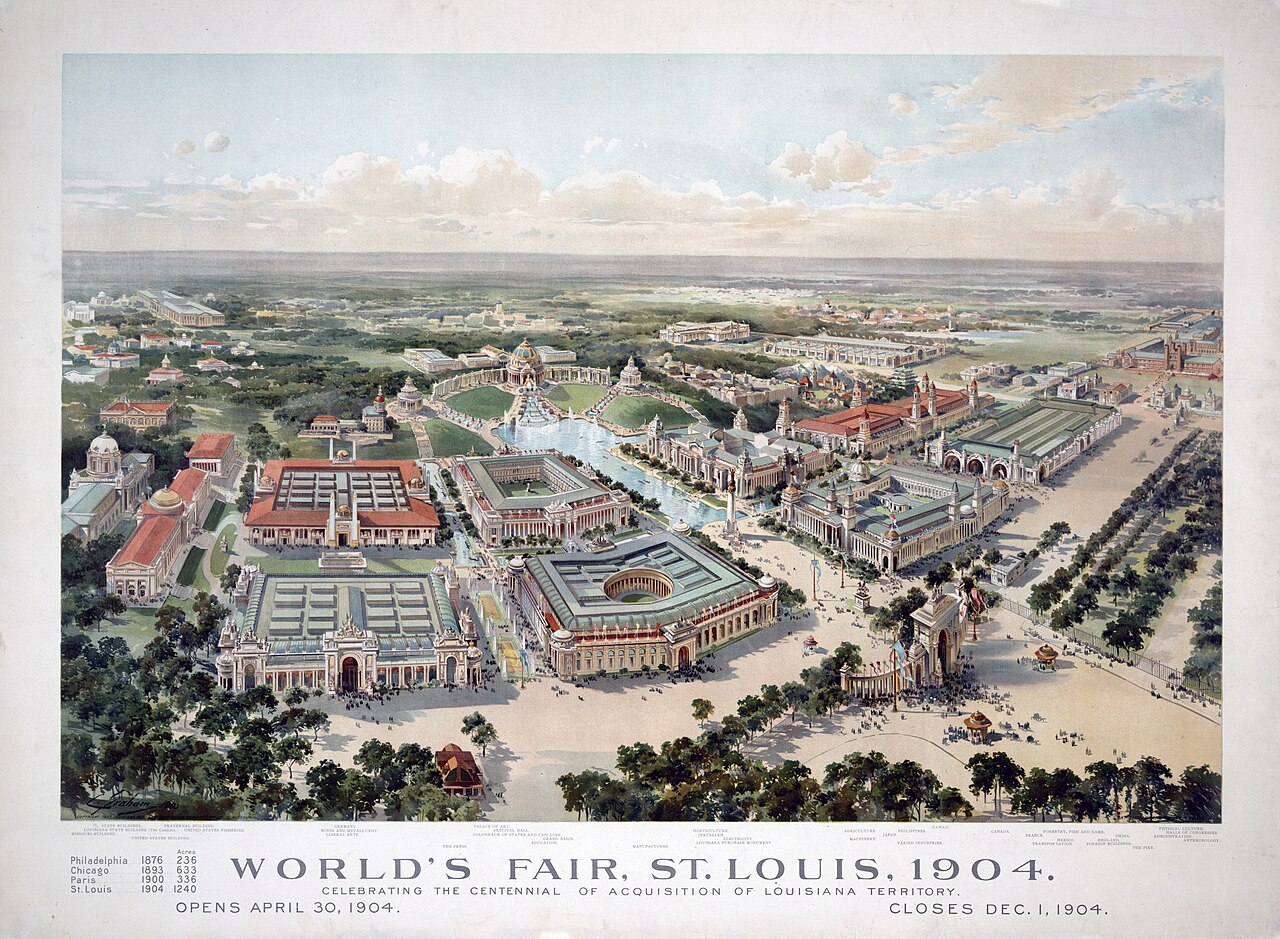
The Lingering Impact of The Fair
While the fair’s buildings were mostly temporary, the neighborhood’s value became very permanent. Here are the three main reasons people were desperate to live here:
1. The “City Beautiful” Infrastructure
St. Louis used the fair as an excuse to perform a massive “urban upgrade” on the West End. While the rest of the city still struggled with coal smoke and unpaved roads, the area around the 5500 block of Pershing was a modern marvel.
- Paved Roads & Sewers: The fair brought advanced sewer systems and paved boulevards to a part of the city that had recently been “thickets and swamps.”
- The “Smokeless” Zone: Because the neighborhood was far west of the heavy industry in the Mill Creek Valley, it was advertised as having cleaner, healthier air—a huge selling point for families in the early 1900s.
2. Living in the “Global Spotlight”
The fair transformed Forest Park from a remote, wild park into a world-renowned cultural center.
- Permanent Landmarks: Residents didn’t just live near a park; they lived near the brand-new Saint Louis Art Museum (the only permanent “palace” from the fair) and eventually the World’s Fair Pavilion (built with the fair’s profits in 1913).
- Social Status: Living within walking distance of the fairgrounds was the ultimate “status symbol.” Even after the fair closed, the prestige remained. The area was seen as the most “modern” and “civilized” part of St. Louis, attracting the city’s new elite.
3. The “Parkview” Effect
Developers like Julius Pitzman (who designed many of St. Louis’s “Private Places”) capitalized on the fair’s momentum by creating Parkview and the Catlin Tract.
- The Design: They used “curvilinear” street patterns and lush landscaping to mimic the beautiful vistas people had seen at the fair.
- The Layout: They specifically designed the apartment blocks on Pershing to feel like a continuation of the fair’s grandeur—ornate entryways, limestone “staff” details (that they later made permanent with real stone), and wide sidewalks meant for strolling.
Social Hierarchy and the Original 15 Minute City
Historically, there was a clear social ladder: You started in a flat on the 5500 block of Pershing, moved east to a high-rise at Pershing and Union as you gained wealth, and eventually hoped to buy a mansion in the private places behind the gates.
Long before ‘transit-oriented development’ became a buzzword, DeBaliviere Place was the gold standard. In the 1920s, a resident at 5559 Pershing could walk half a block to the streetcar, read the morning paper on a clean electric trolley, and be downtown in minutes. This seamless connection made the neighborhood the most cosmopolitan zip code in St. Louis—a place where you could enjoy the quiet of the park by morning and the bustle of the city by noon.
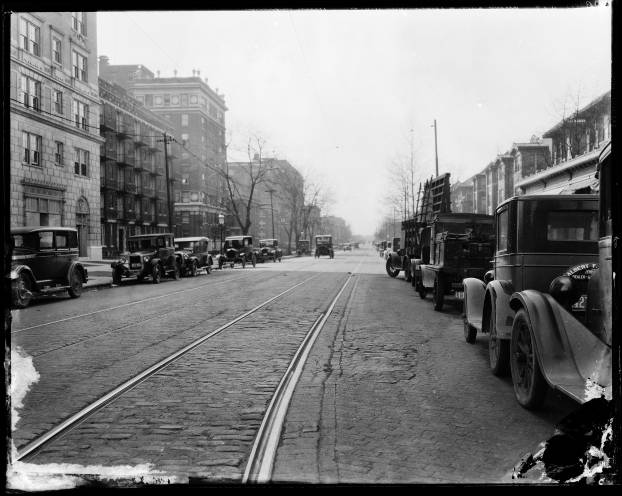
View west down Pershing Ave. at intersection with Union Blvd. Courtesy of St. Louis Public Library.
The Mid-Century Turning Point: A Neighborhood in Jeopardy
By the 1960s and early 70s, the “cosmopolitan” luster of the 5500 block began to fade. Post-war “suburban flight” drew wealth further west to St. Louis County. Many of the grand Pershing Avenue apartments were subdivided into smaller, low-cost rentals. Some fell into high-vacancy disrepair. The area faced the same “urban blight” pressures affecting much of St. Louis. For a decade, it seemed these architectural treasures might face the wrecking ball.
The neighborhood became a symbol of the “inner-city struggle,” characterized by aging infrastructure and a lack of investment. It was against this backdrop of boarded-up windows and overgrown lawns that the neighborhood’s modern savior appeared. He was armed with a radical vision for private urban renewal.
The Pantheon Reconstruction: How Leon Strauss Saved DeBaliviere
The defining moment for modern DeBaliviere Place was the 1970s private renovation movement led by Leon Strauss. An urban pioneer and preservationist, his Pantheon Corporation and vision changed the face of St. Louis. Kingsbury Square, Columbus Square, Lafayette Towne, and the Lammert Building are some of the notable projects Pantheon was involved with. Strauss and his wife, Mary, rescued and renovated the Fox Theatre.
A “New” Neighborhood
Strauss didn’t just renovate buildings; he re-invented the neighborhood’s identity. He spearheaded the private investment that converted dozens of massive apartment blocks into individual condominium units. This brought ownership and stability back to the area.
The Security Kiosks: He famously installed gated entries and security n at the neighborhood boundaries, aiming to give the open apartment blocks the security and cachet of the nearby gated private streets (like Kingsbury Place).
It was this mass condo conversion that preserved the original 1920s architecture we now celebrate.
| A Note on the Gates: While the gates and kiosks installed in the 1970s are often credited with stabilizing the neighborhood’s property values, they remain a symbol of St. Louis’s complicated history with ‘private places.’ To many, these barriers represent an era of exclusionary urbanism—an attempt to create a literal boundary between the ‘re-invested’ neighborhood and the social challenges of the wider city. Today, as St. Louis works to become more integrated and accessible, these gates serve as a reminder of the delicate balance between creating security and maintaining the open, inclusive spirit of a truly urban neighborhood. |
A Deep Dive into a Classic Walk-Up: 5559 Pershing Avenue
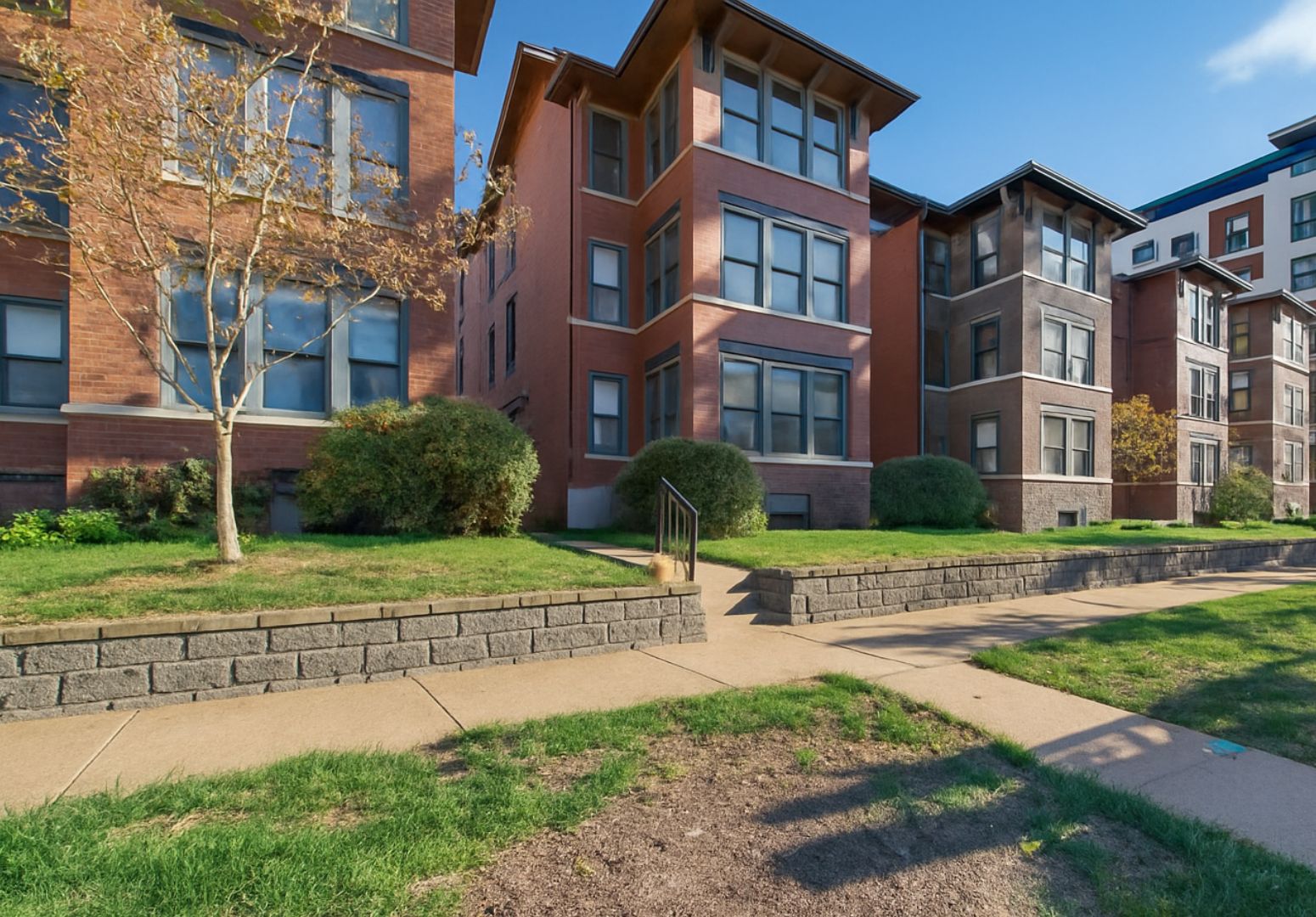 To truly understand this neighborhood, you must understand the architecture. 5559 Pershing is a perfect snapshot of the “grand apartment” era that Strauss worked to preserve.
This traditional three-story red-brick building (built around 1913-1918) was designed for residents who wanted “house-sized” luxury without a mansion’s maintenance. Here is what defines this style:
- The “One-Per-Floor” Layout: In buildings like 5559 Pershing, each individual owner occupies an entire floor. This “intimate association” (usually only three owners) provides a level of privacy and massive square footage (often over 1,800 square feet) rarely found in modern builds.
- Signature Sunrooms: The front of these buildings is defined by their sunrooms (sometimes called Florida rooms), which allowed residents to interact with street life—a feature critical for cooling before the advent of air conditioning.
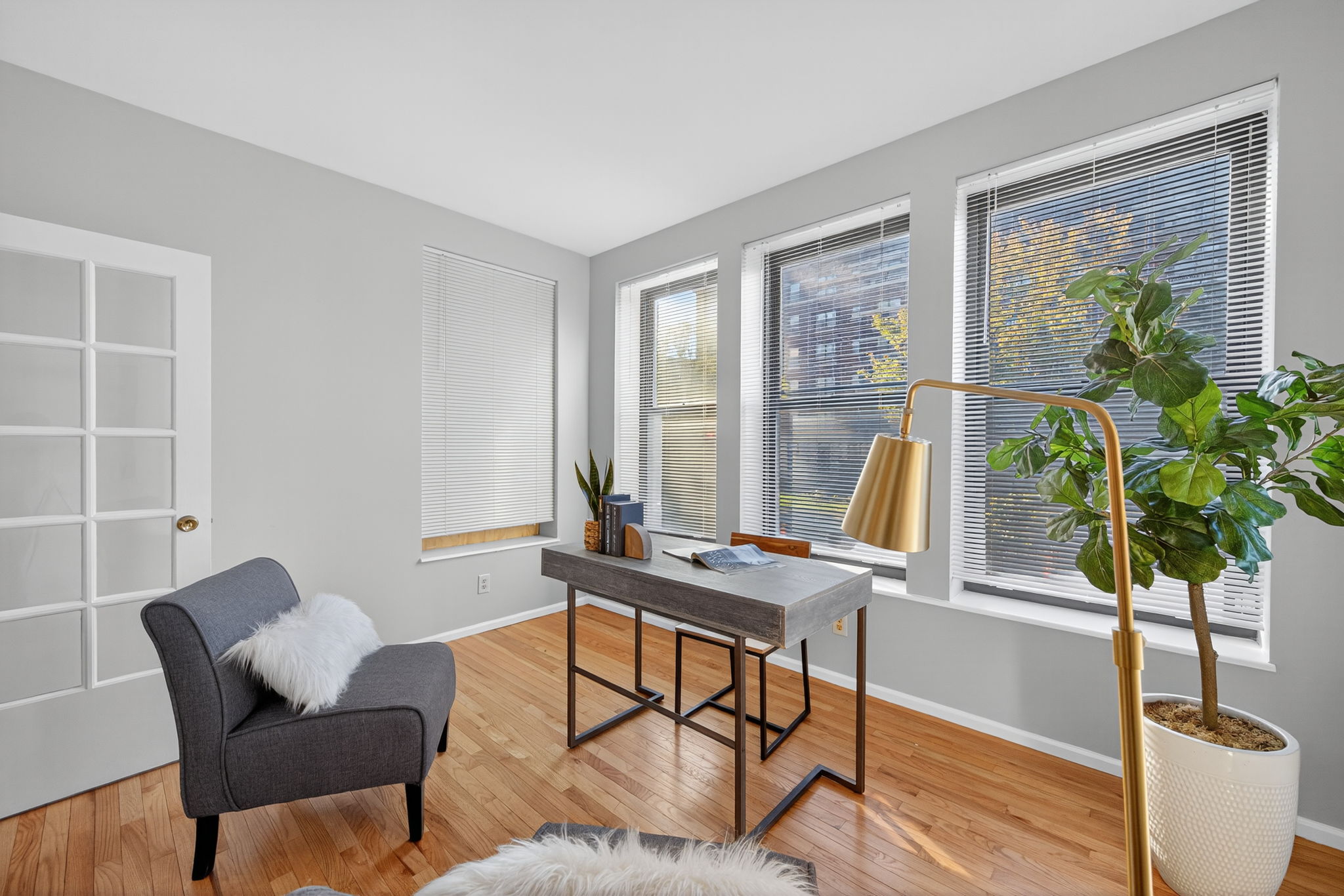
- Interior Craftsmanship: Modern owners benefit from high ceilings (typically 9 feet), massive crown molding, and the presence of original fireplace focal points.
DeBaliviere Place Today
The Legacy Continues
The historic condo stock on Pershing is currently being augmented by modern luxury developments. Tribeca and the massive Expo at Forest Park are examples. But the 5500 block, and buildings like 5559 Pershing, remain the anchor of the neighborhood’s historic identity.
Today, ownership in DeBaliviere Place isn’t just about a modern kitchen or proximity to Forest Park. It’s about owning a piece of a preserved Gilded Age vision. A place that has weathered wars and urban revitalization. A place that remains one of St. Louis’s most vital and beautiful urban districts.
Fall in Love with DeBaliviere Place
Navigating St. Louis’s historic districts requires an expert who knows the stories behind the brick. Whether you’re looking for a pre-war walk-up or a modern high-rise, we can help you find your place in St. Louis history. Contact us today to start your search.