
Posted by Andrea Durway
Live Near Your Work in St. Louis: What 2026 Buyers Need to Know
When people hear about the Live Near Your Work program, they often assume it’s only for first-time buyers trying to break into homeownership. And while it can be a powerful tool for first-time buyers, that’s not the whole story.
In reality, the program is also available to existing homeowners—including past buyers who may be ready to move up, relocate closer to work, or right-size into a home that better fits their current season of life.
As affordability continues to be a major factor in the St. Louis housing market, down payment and closing costs remain one of the biggest obstacles for many buyers—not just those purchasing their first home. That’s where the Live Near Your Work (LNYW) program can make a meaningful difference.
Offered through Washington University in St. Louis and BJC HealthCare, the program provides forgivable loan assistance to eligible employees purchasing homes in select St. Louis neighborhoods. Whether you’re buying your first home or leveraging equity from a previous one, LNYW can help reduce the upfront costs of a purchase—making a move feel more achievable and financially comfortable.
For buyers considering a home purchase in 2026, understanding how this program works, who qualifies, and—most importantly—how timing affects availability can make all the difference.

What Is the Live Near Your Work St. Louis Program?
The Live Near Your Work program is designed to help WashU and BJC employees live closer to where they work while supporting long-term neighborhood investment.
The program provides a forgivable loan of up to $12,500 that can be used toward:
- Down payment
- Closing costs
If you remain employed and live in the home for the required period (typically five years), the loan is fully forgiven. This is not a grant—but if the terms are met, it functions like one.
Why This Program Matters in 2026
As we head into the home buying season of 2026, affordability continues to be a key issue in the St. Louis housing market. Even modest price increases can make it harder for buyers to assemble upfront cash.
The LNYW program can:
- Reduce the amount of cash needed at closing
- Improve overall loan affordability
- Help buyers compete more confidently in popular neighborhoods
However, there’s one critical caveat:
The program has limited funds and runs on specific fiscal cycles. When funds run out, the program pauses until the next cycle begins.
Understanding the Funding Cycles (This Is the Most Important Part)
One of the most common sources of confusion is when funds reset—and the answer depends on your employer.
Washington University Employees
- Funding follows an academic fiscal year
- July 1 – June 30
- Funds are awarded on a first-come, first-served basis
- Once funds are exhausted, no new awards are made until July 1
BJC HealthCare Employees
- Funding follows a calendar fiscal year
- January 1 – December 31
- Also first-come, first-served
- Once funds are gone, buyers must wait until January 1 for renewal
What this means for 2026 buyers:
Timing your purchase early in the applicable fiscal year significantly increases your chances of securing funds.
Who Is Eligible?
Eligibility rules are updated periodically, but as of the most recent guidelines, buyers must:
- Be a WashU or BJC employee working at least 24 hours per week
- Have a minimum of one year of employment at the time of application
- Purchase a home in an approved LNYW neighborhood
- Use the home as a primary residence
- Work with a program-approved lender
- Complete homebuyer education if required
Employees may only use the benefit once, and it cannot be combined with another employee’s benefit on the same purchase.
What Is Eligible?
Maximum Purchase Price
The program sets a maximum purchase price, which is reviewed and adjusted periodically. As of the most recent guidelines, the cap is approximately $300,000. Because price limits are tied to funding cycles and policy updates, buyers should always confirm the current cap before submitting an offer.
Eligible Property Types
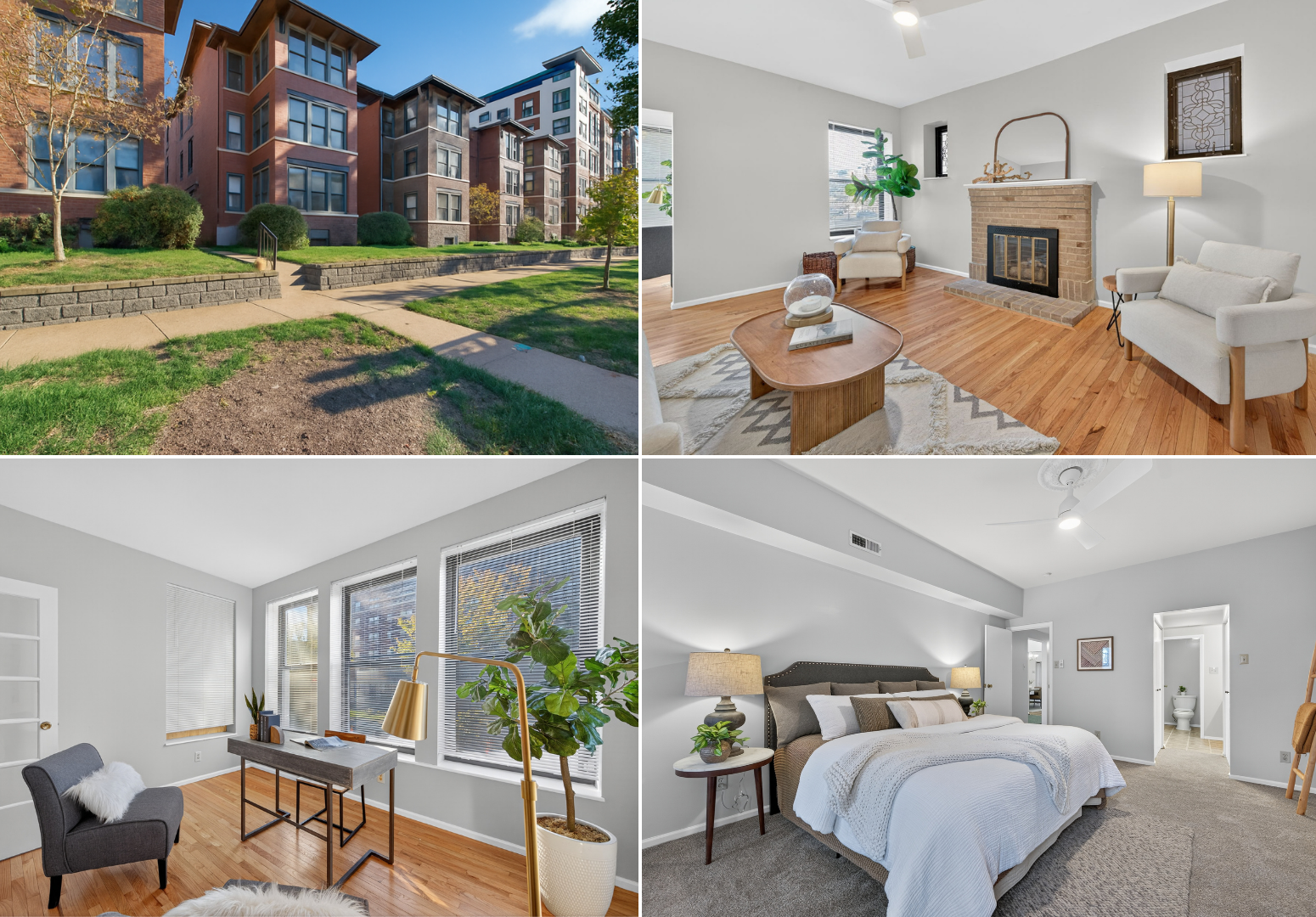
Live Near Your Work is designed for owner-occupied primary residences. In most cases, eligible property types include:
- Single-family homes
- Townhomes
- Condominiums
Multi-unit properties and mixed-use buildings are typically not eligible, and the home must be used as your primary residence—not as a rental or investment property.
As with neighborhood boundaries, property eligibility is reviewed on a case-by-case basis, so confirmation early in the process is essential.
Where Can You Buy?
Because boundaries and eligibility maps can change, buyers should always confirm eligibility using the official LNYW map before making an offer.
City of St. Louis Neighborhoods
Academy, Baden, Benton Park, Benton Park West, College Hill, Compton Heights, Covenant Blu-Grand Center, DeBaliviere Place, Downtown, Downtown West, Dutchtown, Fairground, Forest Park Southeast, Fountain Park, Fox Park, Gate District, Gravois Park, Greater Ville, Hamilton Heights, Hyde Park, Jeff-Vander-Lou, Kingsway East, Kingsway West, Kosciusko, Lafayette Square, LaSalle Park, Lewis Place, Marine Villa, Mark Twain, Mark Twain I-70 Industrial, McKinley Heights, Midtown, Mount Pleasant, Near North Riverfront, North Pointe, North Riverfront, O’Fallon, Old North, Peabody Darst Webbe, Penrose, Riverview, Skinker-DeBaliviere, Soulard, St. Louis Place, Tower Grove East, Vandeventer, the Ville, Visitation Park, Walnut Park East, Walnut Park West, Wells-Goodfellow, West End, and parts of the Central West End
St. Louis County Municipalities
Bel-Nor, Bel-Ridge, Bellefontaine Neighbors, Bellerive Acres, Berkeley, Beverly Hills, Black Jack, Breckenridge Hills, Calverton Park, Charlack, Cool Valley, Country Club Hills, Dellwood, Edmundson, Ferguson, Florissant, Flordell Hills, Glen Echo Park, Greendale, Hanley Hills, Hillsdale, Jennings, Kinloch, Moline Acres, Normandy, Northwoods, Norwood Court, Overland, Pagedale, Pasadena Hills, Pasadena Park, Pine Lawn, Riverview, St. John, Sycamore Hills, Uplands Park, Velda City, Velda Village Hills, Vinita Park, Wellston, Woodson Terrace, and other parts of University City, Hazelwood, and unincorporated St. Louis County
What Happens When Funds Run Out?
This is where careful planning matters. When annual funding is depleted:
- No new loans are awarded
- Buyers must wait until the next fiscal cycle begins
- Contracts already under review may not be protected
For buyers hoping to use the program in 2026, this means:
- Get pre-approved early
- Confirm eligibility before house hunting
- Coordinate closely with your lender and real estate agent
- Avoid waiting until late spring (for WashU) or late fall (for BJC)
How the Forgivable Loan Works
While exact terms may vary slightly, the structure is typically:
- Loan is recorded at closing
- Forgiven incrementally or fully after five years
- If you sell or leave employment early, a prorated amount may need to be repaid
This is why the program works best for buyers planning to stay put for several years.
A Strategic Tool—Not a Shortcut
The Live Near Your Work program is a powerful benefit, but it works best when paired with:
- Clear expectations
- Realistic budgeting
- A strong understanding of neighborhood options
- Early preparation
For eligible employees, it can be the difference between continuing to rent and building long-term equity in a home near work.
Thinking About Using Live Near Your Work in 2026?
If you’re a WashU or BJC employee considering a move this year or next, planning ahead is key. We regularly help buyers navigate LNYW timing, neighborhood eligibility, and lender coordination—so there are no surprises at contract time.
If you’d like help exploring neighborhoods, confirming eligibility, or building a smart timeline around funding cycles, we’re happy to help.
Sometimes the best opportunities aren’t about finding the perfect house—they’re about knowing when the door is open.